
First, the Calm Overview
In the days after a parent dies, very little has to happen immediately, and rushing usually causes mistakes. The handful of things that matter early are getting the death certificate, keeping the home and belongings secure, and finding the important documents. The legal and financial steps, including any probate, come after, and you do not have to handle them alone. This page walks you through it in order. (If your parent is still living but declining, see the legal checklist for aging parents instead.)
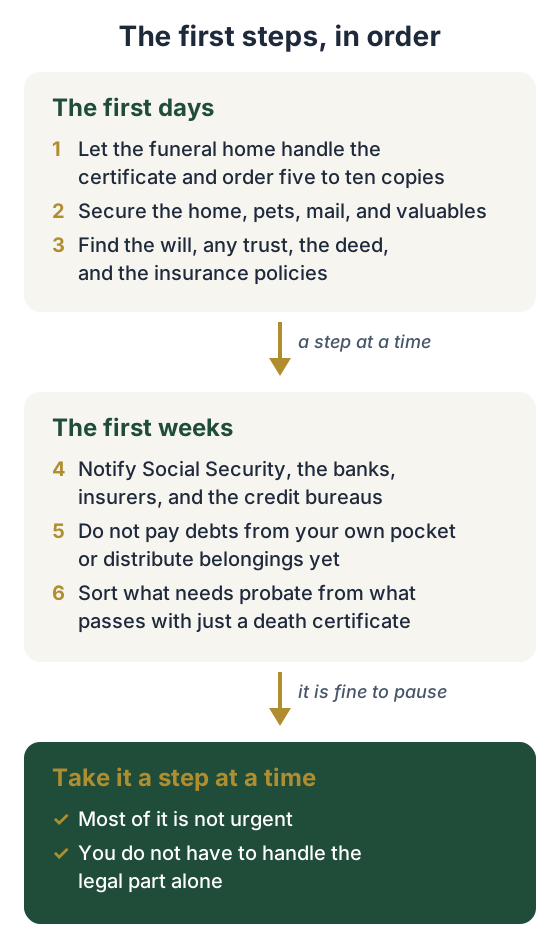
The First Days
- Let the funeral home handle the certificate. They typically order the certified death certificates and the pronouncement. Tell them how many copies you need (often five to ten), because each bank, insurer, and the court wants its own.
- Secure the property. Lock up the home, look after pets, collect mail, and safeguard valuables, jewelry, and documents. If the home will sit empty, make sure it is protected.
- Find the documents. The will, any trust, the deed to the home, insurance policies, recent statements, and a list of accounts. These tell you how the estate is set up and what passes where.
Who to Notify
You do not need to call everyone at once. Start with these, and keep a simple list of who you have contacted:
- Social Security (the funeral home usually reports the death; benefits stop, and a payment for the month of death generally has to be returned).
- Banks, brokerages, and any pension or employer.
- Life insurance and health insurers (Medicare or a plan).
- The three credit bureaus, to prevent identity theft against your late parent.
What Not to Do Yet
Resist the urge to pay debts out of your own pocket, distribute belongings, or close accounts before you understand the whole picture. Creditors have a defined process in probate, and paying the wrong ones first, or handing out assets before debts and any court steps are handled, can make the person managing the estate personally liable. Securing and gathering come first. Distributing comes last.
Does It Have to Go Through Probate?
Not all of it. Probate only governs assets in your parent’s name alone. Many things pass outside it automatically, with just a death certificate: life insurance and retirement accounts with named beneficiaries, pay-on-death bank accounts, property in a trust, jointly owned property with survivorship, and a home that passed by a lady bird deed. The assets that are in your parent’s sole name, often the house or a solo account, are the ones that need probate. Estimate what probate would cost →
You do not have to handle the legal part alone.
Book a free 30-minute consult. We will tell you exactly what needs probate and what does not, and handle it for you, remotely, for a flat fee.
Book your free consultOpening Probate, if You Need It
If there are assets in your parent’s sole name to retitle or sell, you open probate in the county where they lived. A smaller estate, or one where the death was more than two years ago, may qualify for summary administration (a few weeks to a couple of months; check in 60 seconds). Larger or more recent estates use formal administration (usually several months). If you live out of state, we handle the entire Florida probate remotely, and as the child you generally qualify to serve. See how Florida probate works → If the estate includes a home, here is what to do with an inherited house →
Handling this from another state? Get the free checklist
The one-page Out-of-State Family Florida Checklist: what to do first, what not to touch, and how the whole Florida side happens without flying down.
We'll email the PDF and nothing else unless you ask. Downloading it does not create an attorney-client relationship; please don't send confidential details yet.
Frequently Asked Questions
What Are the First Things to Do When a Parent Dies in Florida?
In the first days: let the funeral home or medical examiner handle the death pronouncement and the death certificate, secure your parent’s home and any pets or valuables, and locate the important papers (the will, any trust, insurance policies, account information, and the deed to the home). You do not need to rush legal or financial steps in the first week. The urgent things are the certificate, the security of the property, and finding the documents.
How Do I Get a Death Certificate in Florida?
In most cases the funeral home orders the certified death certificates for you as part of their services, and you tell them how many you need. You can also order certified copies from the Florida Bureau of Vital Statistics. Order several (often five to ten), because banks, insurers, and the court each want their own certified copy, and getting more later is slower. A certificate that shows cause of death is sometimes needed for insurance, so ask the funeral home for the right type.
Who Do I Need to Notify After a Parent Dies?
The main ones: Social Security (the funeral home usually reports the death, which stops benefits; do not cash a payment for the month of death), any pension or employer, life insurance companies, banks and brokerages, Medicare or health insurers, and the three credit bureaus to guard against identity theft. You generally do not need to notify everyone at once; start with Social Security and the financial institutions, and keep a simple list of who you have contacted.
What Should I Not Do Right Away?
Do not rush to pay your parent’s debts out of your own pocket, distribute their belongings to family, or close accounts before you understand the full picture. Creditors have a defined process in probate, and paying the wrong ones first, or distributing assets before debts and any court steps are handled, can create personal liability for the person managing the estate. It is fine to pause. Securing things and gathering information comes first; distributing comes last.
Does Everything My Parent Owned Have to Go Through Probate?
No. Probate only governs assets in your parent’s name alone with no other instruction. Many things pass outside probate automatically: life insurance and retirement accounts with named beneficiaries, pay-on-death bank accounts, property held in a trust, jointly owned property with survivorship, and a home that passed by a lady bird deed. So part of the estate may transfer with just a death certificate, while the rest needs probate. We help you sort which is which.
When Do I Need to Open Probate, and How Long Does It Take?
You open probate when there are assets in your parent’s sole name that have to be retitled or sold, such as a home or a solo bank account. A smaller estate, or one where the death was more than two years ago, may qualify for summary administration, which can finish in a few weeks to a couple of months. Larger or more recent estates use formal administration, usually several months. We confirm which applies at the consult.
I Live Out of State. Can You Handle My Parent’s Florida Estate?
Yes. This is one of the most common situations we handle: an adult child living elsewhere settling a Florida parent’s estate. Florida attorneys file everything through a statewide electronic court system, so the whole probate can run by phone, email, and video without you traveling here. If you are the child of the person who died, you also generally qualify to serve as personal representative even as a non-resident.
Common Situations
The out-of-state daughter. Her mother passed away in a Naples condo. She orders death certificates through the funeral home, secures the unit, and finds the deed and a bank statement. The condo is in her mother’s sole name, so it needs probate; we open it and handle the sale, all without her flying down.
The estate that mostly passed outside probate. A father’s accounts all named beneficiaries and his home had a lady bird deed. Almost everything transferred with a death certificate, and only a small solo account needed a simple summary administration.
The well-meaning mistake. A son starts paying his late mother’s credit cards from his own account and hands her jewelry to relatives, before learning there were other debts and the estate could not cover everything. We help families avoid this by sequencing things correctly.
The power of attorney that stopped working. A son paid his father’s bills for years under a durable power of attorney, and after the funeral he assumed he could keep using it to wrap things up. Under Florida law every power of attorney ends at the moment of death, so the bank froze the account as soon as it learned. Nobody could touch the money until the court appointed a personal representative; we opened the probate and he was appointed. If you were the agent, the safest move is to stop using the document the day you learn of the death, and ask before you move anything.
Sources of Law
- Florida death records: Florida Department of Health, Bureau of Vital Statistics (certified death certificates). (retrieved 2026-06-08)
- Florida probate: Fla. Stat. ch. 733 (formal administration) and ch. 735 (summary administration and disposition without administration); §733.702 (creditor claim period). Who may serve as personal representative, including non-residents related to the decedent: §733.304.
Updated on July 12, 2026. Reviewed by Kevin D. Klagge, Esq., Fla. Bar No. 99502. Attorney Kevin Klagge represents families, businesses, and international clients in estate planning and international law, with a focus on Florida legal tools. He litigates estate and business issues in court. General information about Florida law, not legal advice, and no attorney-client relationship is created. What an estate requires depends on the specific facts. Do not send confidential information until we have agreed to represent you.