
The Short Answer
You do not have to live in Florida, and you almost certainly will not have to travel here. Florida attorneys file everything through a statewide electronic court system, and the state allows signing by remote online notary, so a Florida probate can be run entirely from your kitchen table in another state. Grieving a parent is hard enough without a plane ticket attached to every court date. See how Florida probate works →
Can You Be in Charge From Out of State?
This is the first question, and Florida has a clear rule. The person who runs the estate is called the personal representative, and someone who lives outside Florida can serve only if they are related to the person who died, a spouse, child, parent, sibling, or certain other relatives (or married to one). If you are your parent’s child, you qualify. Where this trips people up is a close family friend or a distant connection who lives out of state, because they generally cannot serve. We confirm who is eligible at the very start, so the court does not send you back to square one.
How Remote Florida Probate Actually Works
Once we know who is serving, the process is straightforward and almost entirely paperless:
- We gather the will, the death certificate, and a list of the assets, all by email or a secure upload.
- We open the probate in the right Florida county, the one where your parent lived, and file everything electronically.
- You sign what needs signing by remote online notary, from wherever you are.
- We deal with the court, the creditors, and the deadlines, and keep you updated in plain English.
- When it is time to sell the home or distribute the accounts, we coordinate that too.
The Two Out-of-State Situations
It helps to know which one you are in, because they are handled differently:
- Your parent lived in Florida; you live elsewhere. This is a normal Florida probate, just run remotely for an out-of-state family. The home and accounts are Florida assets, and Florida is where it all happens.
- Your parent lived elsewhere but owned a Florida property. This is called ancillary probate: a separate, usually smaller Florida case that runs alongside the main estate back in their home state. We handle the Florida piece and coordinate with the lawyer running the main one.
Handling a Florida estate from far away?
Book a free 30-minute consult. We will lay out exactly what your situation needs, and what it will cost, before you commit to anything.
Book your free consultWhich Kind of Probate, and What It Costs
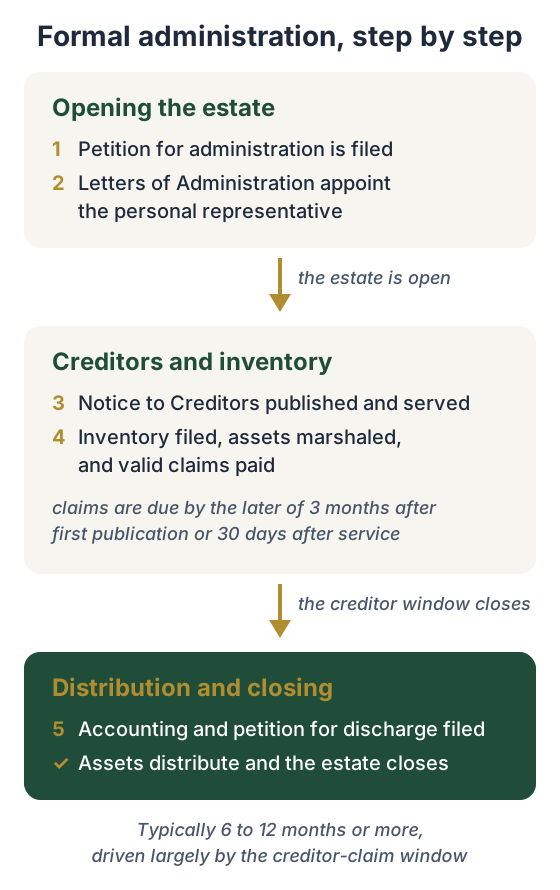
Not every estate needs the full process. A smaller estate, or one where the death was more than two years ago, may qualify for summary administration, which is faster and cheaper. Larger or more recent estates go through formal administration, which usually takes several months, partly because Florida gives creditors a set window to come forward. Living out of state does not raise the cost with us. You can estimate the statutory fee with our probate cost calculator, and we quote you a flat number at the consult, often below the statutory figure.
Handling this from another state? Get the free checklist
The one-page Out-of-State Family Florida Checklist: what to do first, what not to touch, and how the whole Florida side happens without flying down.
We'll email the PDF and nothing else unless you ask. Downloading it does not create an attorney-client relationship; please don't send confidential details yet.
Frequently Asked Questions
Can I Probate a Florida Estate if I Live in Another State?
Yes. You do not have to live in Florida, or even travel here, to handle a Florida probate. Florida attorneys file everything through a statewide electronic court portal, so the whole case can be run by phone, email, and video while you stay home. We handle Florida probates every day for adult children scattered across the country.
Can an Out-of-State Person Serve as Personal Representative in Florida?
Often, but Florida has a specific rule. A person who lives outside Florida can serve as personal representative (the person in charge of the estate) only if they are related to the person who died, a spouse, child, parent, sibling, or certain other relatives, or married to such a relative. A non-relative who lives out of state generally cannot serve. If you are the deceased’s child, you almost always qualify. We confirm this early so there are no surprises.
Do I Have to Fly to Florida for the Probate?
Almost never. Because Florida courts accept electronic filing and remote online notarization, you can sign what you need to sign from home and we appear for the estate here. In a typical probate, the out-of-state family never sets foot in a Florida courthouse. That is the entire point of hiring a Florida firm that works remotely.
My Parent Lived in Florida but I Need to Sell Their Home. What’s the Process?
If the home was in the parent’s name alone, it usually has to pass through Florida probate before it can be sold with clear title, and a title company will insist on it. We open the probate, get the personal representative authority to sell, and coordinate the closing, all without you having to be here. If your parent had set up a lady bird deed beforehand, the home would have passed without probate, which is worth knowing for your own planning.
What if My Parent Lived in Another State but Owned a Florida Vacation Home?
That is the mirror image, and it has its own name: ancillary probate. When someone dies in their home state but owns real estate in Florida, the Florida property needs a separate, smaller Florida probate alongside the main one back home. We handle the Florida side and coordinate with the lawyer running the main estate, so the two pieces fit together.
What Is Ancillary Probate in Florida, and How Much Does It Cost?
Ancillary probate (or ancillary administration) is a secondary Florida probate opened when a person who lived in another state dies owning property here, usually a vacation home or condo. The main probate happens in their home state, but that state has no authority over the Florida real estate, so a Florida ancillary case is needed to clear title. It is generally smaller and faster than a full Florida probate, and we quote a flat or clearly estimated fee. You can also estimate the statutory figure with our probate cost calculator.
How Long Does a Florida Probate Take?
It depends on the type. A small or older estate may qualify for summary administration, which can finish in a few weeks to a couple of months. A full formal administration usually runs about 6 to 12 months, partly because Florida law gives creditors a set window to come forward. We tell you which path your situation fits at the consult.
How Much Does an Out-of-State Florida Probate Cost?
The same as any Florida probate; living out of state does not cost extra with us. Florida law sets a presumed-reasonable attorney fee based on the size of the estate, but it is a ceiling, not a mandate, and a flat-fee firm usually comes in under it. You can estimate the statutory figure with our probate cost calculator, then we quote you a real, flat number at the consult.
Common Situations
The daughter in Ohio. Her mother passed away in a Naples condo, leaving the home and two bank accounts. The daughter qualifies to serve because she is the child, signs everything by remote notary, and never flies down. We open the probate, clear the title, and help her sell the condo, all by phone and video.
The snowbird’s vacation home. A father who lived in New York owned a Fort Lauderdale condo. His estate is being probated in New York, but the Florida property needs its own ancillary case. We handle the Florida side and hand off cleanly to the New York attorney.
The two-years-later estate. A son never got around to probating his father’s small Florida estate, and it has now been three years. Because more than two years have passed, summary administration is available, a faster, lighter process that gets the house sold without the full formal probate.
Sources of Law
- Fla. Stat. §733.304: who may serve as personal representative when not a Florida resident (relatives of the decedent and their spouses). (retrieved 2026-06-07)
- Fla. Stat. ch. 734: ancillary administration of Florida property owned by a nonresident decedent.
- Fla. Stat. ch. 735: summary administration and disposition without administration. §733.6171: presumed-reasonable attorney fees (a ceiling, not a mandate).
Updated on July 11, 2026. Reviewed by Kevin D. Klagge, Esq., Fla. Bar No. 99502. Attorney Kevin Klagge represents families, businesses, and international clients in estate planning and international law, with a focus on Florida legal tools. He litigates estate and business issues in court. General information about Florida law, not legal advice, and no attorney-client relationship is created. Whether and how an estate must be probated depends on the specific facts. Do not send confidential information until we have agreed to represent you.