
What Elder Law Actually Is
Estate planning is mostly about who gets what after you die. Elder law is about the years before that: paying for long-term care without going broke, staying in charge of your own decisions if your health slips, and protecting the family home. The two overlap. Elder law adds the living-care problems an ordinary will never touches.
Long-Term Care Is the Threat Most Families Don’t Price In
Skilled nursing in Florida commonly runs several thousand dollars a month and up. Medicare pays only for short rehab stays, not long-term custodial care, and private long-term-care insurance is rare. The bill that wipes out a lifetime of savings is usually a care bill, not a tax bill. That is why nursing-home Medicaid planning sits at the center of elder law. See Medicaid planning → · check eligibility → · does Medicare cover it? → · POA for an aging parent →
Nursing-Home Medicaid, in Plain English
Long-term-care Medicaid has three tests: a level-of-care test, an income test, and an asset test. Florida is an income-cap state, which is why a Qualified Income (Miller) Trust (flat $750) is so often needed when a parent’s income is over the cap. A five-year look-back penalizes uncompensated transfers (the penalty calculator shows how much a gift costs in lost coverage), and the homestead is generally protected for eligibility.
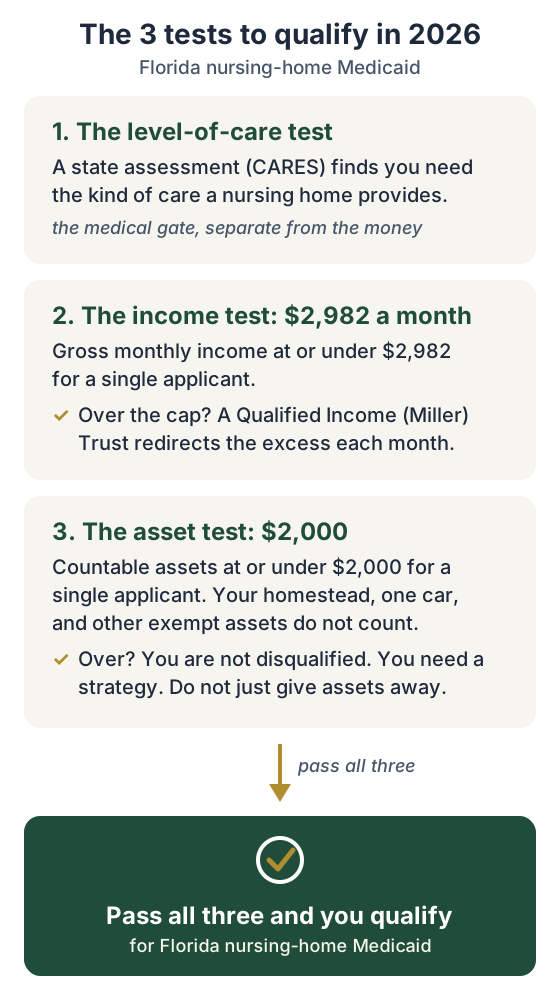
The full numbers live on our calculator and Medicaid planning page, where they stay current.
Protecting the Home
The homestead is the family’s biggest and most emotional asset, and it has two jobs: keep the parent eligible for care benefits, and pass the home to the kids without probate. A lady bird deed does both. The parent keeps full control during life, and, done right, it does not trip the Medicaid transfer penalty the way a plain gift deed would. See how the home is protected → Some situations call for a Medicaid asset protection trust instead. The right tool depends on the family, and the common fear has a reassuring answer: can a nursing home take your house? →
Helping a parent from another state?
We run the Medicaid, the deed, and the incapacity plan by phone and video, so you can drive it from anywhere.
Book your free consultIncapacity Planning: The Documents That Avoid a Guardianship
If a parent loses capacity with no plan, the family’s only route is a court guardianship: expensive, public, slow, and stripping the parent of rights. The fix is a small set of documents signed while the parent is clearly competent. Under Florida law, a court must consider these less-restrictive alternatives before imposing guardianship.
The financial half is a durable power of attorney: effective immediately (Florida bars “springing” POAs), with powers specifically listed and the seven special powers separately initialed, which is exactly what an agent needs to do Medicaid spend-down. The health-care half is a designation of health-care surrogate, a living will, and a HIPAA authorization. Without a directive, Florida’s default decision-making ladder (spouse, then adult children) applies, which is a real problem for blended families or unmarried partners. Surrogate, living will, and HIPAA: $350 per person.
Guardianship and Its Alternatives
Guardianship is a court taking over decision-making for someone found incapacitated. It is a last resort. Florida favors the alternatives: a durable POA, a health-care surrogate, a funded revocable trust with a successor trustee, and a supported decision-making agreement for someone who wants a helper rather than a decision-maker. The message for worried families: the incapacity package, signed early, is what blocks a guardianship later. We handle guardianship when it is genuinely needed, and help families avoid it when it is not.
Special-Needs Planning
When a family member with a disability would lose SSI or Medicaid by inheriting outright, a special-needs trust holds funds for their benefit without disqualifying them. A third-party trust is funded by parents or grandparents. A first-party trust holds the disabled person’s own money (a settlement, for example) and carries a Medicaid payback. We draft them for a flat fee quoted at the consult.
Elder Financial Exploitation
The fear has a name: a “new friend,” a caregiver, even a relative draining a parent’s accounts. Florida criminalizes financial exploitation of an elderly or disabled adult, and separately disqualifies an exploiter from inheriting from the victim, which can apply even without a criminal conviction. A well-drafted POA reduces the opening (successor agents, no self-dealing for non-relatives). When money is moving right now, a court can freeze the accounts within days; when it is already gone, litigation can recover it. See the full elder abuse guide →
Elder Law vs. Estate Planning
Estate planning covers wills, trusts, probate avoidance, and who inherits, all after death. Elder law covers paying for care, Medicaid, incapacity documents, guardianship avoidance, protecting the home, and financial exploitation, all during life. Most families over 60 need both, coordinated. That is exactly what one office can do. See the full estate plan →
How We Work
Flat fees are quoted up front for planning documents. Medicaid and crisis work is quoted at the consult because every family’s numbers differ. Everything runs by phone and video, so an adult child in another state can drive it for a Florida parent. Kevin litigates Florida probate and trust disputes, not just drafts documents, so the plans are built to hold up in court. Government costs (recording, filing) are additional, at cost. See pricing →
Elder Law Across Florida
We serve families throughout Florida remotely. Local pages for some of the areas we work in:
Get the printable checklist (free PDF)
The one-page Florida Aging-Parents Legal Checklist: every document and decision, in the order that matters, with room to check things off as a family.
We'll email the PDF and nothing else unless you ask. Downloading it does not create an attorney-client relationship; please don't send confidential details yet.
Frequently Asked Questions
What Does an Elder Law Attorney Do?
Elder law covers the legal problems of aging: paying for long-term care through Medicaid, protecting the home, the incapacity documents that avoid guardianship (durable POA, health-care surrogate, living will), special-needs planning, and elder financial exploitation. It overlaps with estate planning but focuses on care and capacity during life, not only what happens after death.
What Is the Difference Between an Elder Law Attorney and an Estate Planning Attorney?
Estate planning is mostly about passing assets after death (wills, trusts, avoiding probate). Elder law adds the living problems: care costs, Medicaid, staying in control if your health declines, and guardianship avoidance. Most Florida families over 60 need both, coordinated.
How Much Does an Elder Law Attorney Cost in Florida?
We work on flat fees for planning documents so you know the price before you start. Incapacity documents start at $350; a full will-based plan is $1,200 individual / $1,950 couple. Medicaid and crisis work is quoted at the free consult because it depends on your numbers. Government costs (recording, filing) are extra, at cost.
Will Medicaid Take My Parent’s House?
The Florida homestead is generally protected for Medicaid eligibility, but how the home is titled and what happens at death (estate recovery) still matter. A lady bird deed is a common way to keep the home protected during life and pass it to the kids without probate. Planning ahead is what protects it; see our Medicaid planning page and calculator.
What Is a Miller Trust / Qualified Income Trust in Florida?
Florida caps the income you can have and still qualify for nursing-home Medicaid. If a parent’s income is over the cap, a Qualified Income (Miller) Trust routes the excess so they still qualify. It’s often required here. We set one up for a flat $750.
What Documents Do I Need So My Parent Can Avoid Guardianship?
A durable power of attorney (finances), a designation of health-care surrogate and living will (medical), and a HIPAA authorization. Signed while your parent is clearly competent, these are the less-restrictive alternatives a Florida court must consider before appointing a guardian (§744.331(6)(b)).
My Parent Already Lost Capacity and Never Signed Anything. What Now?
If there’s no valid POA or surrogate in place, the family usually has to petition for guardianship in court. We can guide you through that, and we’ll always check first whether any existing document (an old POA, a funded trust) lets you avoid it.
Is a Durable Power of Attorney From a Website Good Enough in Florida?
Often no. Florida requires powers to be specifically listed, bars “springing” POAs, and makes the gifting and trust powers needed for Medicaid work only if they’re separately initialed (§§709.2108, 709.2201, 709.2202). A generic form frequently fails at the moment the family needs it, or a bank rejects it.
What Is a Special-Needs Trust and Does My Disabled Child Need One?
A special-needs trust holds money for a person with a disability without disqualifying them from SSI or Medicaid. Parents can fund a third-party trust; a first-party trust holds the person’s own money (a settlement, for example) and has a Medicaid payback. We draft them for a flat fee quoted at the consult.
Someone Is Taking Advantage of My Elderly Parent Financially. Can a Lawyer Help?
Yes. Florida law criminalizes financial exploitation of the elderly (§§825.102 to 825.103) and can strip an abuser of any inheritance from the victim (§732.8031). We can put protective documents in place going forward and pursue recovery in court for money already taken.
Can You Help if I Live Out of State and My Parent Is in Florida?
Yes. We serve clients throughout Florida remotely and regularly work with adult children in other states handling a Florida parent’s Medicaid, deed, or incapacity plan by phone and video.
Is a Durable POA the Same as a Guardianship?
No. A durable POA is something your parent signs voluntarily while competent, choosing their own agent. Guardianship is a court process that takes decisions away from someone found incapacitated. The whole point of the POA is to avoid the guardianship.
Common Situations
The phone call from Ohio. An adult daughter in Columbus gets the call: Dad fell, he’s headed to rehab in Boca, and the social worker is already talking about “long-term placement” and “spend-down.” She has no POA and no idea what he owns. On a video consult we map his income against the Florida cap, set up a Qualified Income Trust, file the Medicaid application, and pull together the documents he can still sign while he has capacity. She runs it all from her kitchen table.
“We just need to protect the house.” A retired couple own their Miami homestead free and clear and want it to go to their two kids without probate, while keeping the door open to Medicaid later. A plain quitclaim to the kids would be a Medicaid transfer they’d regret and cost the kids a step-up in basis. Instead we record a lady bird deed: they keep full control now, the home passes automatically later, and the look-back trap is avoided.
The “new friend.” A widower’s daughter notices a recent acquaintance is suddenly on Dad’s bank account; thousands are missing. We find the old POA was a generic form a bank had already rejected, put a properly drafted durable POA with a trustworthy successor in place, and pursue the funds already moved. (Illustrative, not an actual client.)
Sources of Law
- Powers of attorney: Fla. Stat. ch. 709 (§709.2104, §709.2108, §709.2201, §709.2202, §709.2208, §709.2120, §709.2209). Health-care directives: ch. 765 (§765.204, §765.401). Guardianship: §744.331(6)(b). Exploitation: §§825.101 to 825.103; §732.8031 (forfeiture). Medicaid figures live on the calculator and Medicaid page (verified 2026). (retrieved 2026-06-07)
Updated July 11, 2026. Reviewed by Kevin D. Klagge, Esq., Fla. Bar No. 99502. Attorney Kevin Klagge represents families, businesses, and international clients in estate planning and international law, with a focus on Florida legal tools. He litigates estate and business issues in court. General information about Florida law, not legal advice, and no attorney-client relationship is created. Please don’t send confidential details until we’re engaged.