
The Short Answer
A Medicaid asset protection trust is an irrevocable trust that holds your home and savings so they no longer count against you for nursing-home Medicaid, and so they pass to your family outside probate, beyond the reach of estate recovery. You usually keep the right to live in your home and to receive income, while an adult child or other trusted person serves as trustee. It is one of the strongest tools in elder law, with one firm condition: it has to be set up at least five years before you need care. Plan ahead and it works beautifully; wait too long and it cannot help.
Why a Regular Living Trust Will Not Do This
People often assume their revocable living trust protects them from nursing-home costs. It does not, and this is the single most common misunderstanding. Because a revocable trust can be undone, and the assets pulled back out, Medicaid still counts everything in it as yours. A Medicaid asset protection trust works only because it is irrevocable. The protection comes precisely from the fact that you have given up the power to freely take the assets back. Same word, "trust," but a completely different tool.
The Five-Year Look-Back: the One Rule That Governs Everything
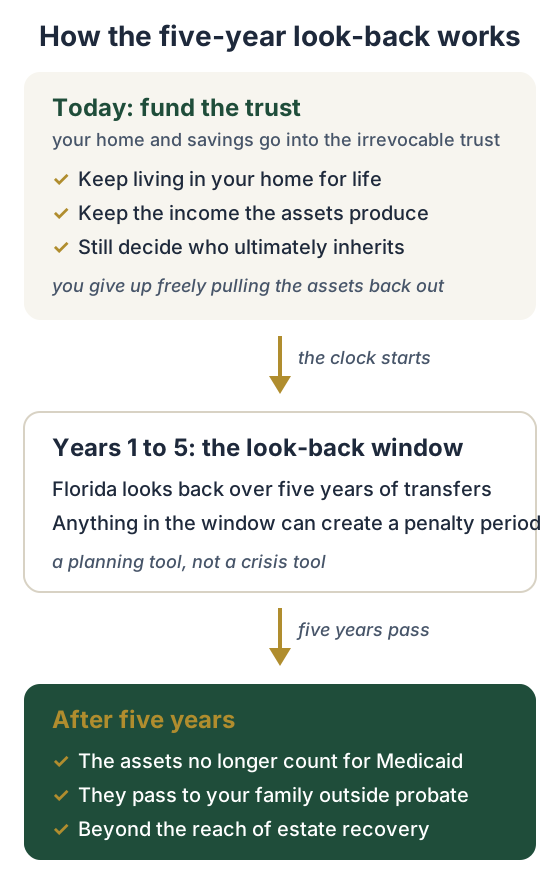
When you apply for nursing-home Medicaid, Florida looks back over the previous five years of transfers, and moving assets into this kind of trust counts as a transfer. Anything inside that window can create a penalty period when Medicaid will not pay. That is why this is a planning tool, not a crisis tool. The families it serves best are those acting in their healthy years, well before care is on the horizon. If care is already needed, we do not reach for this trust; we use crisis strategies built for that moment instead. If a transfer already happened, the Medicaid penalty calculator shows what it would cost in months of coverage.
What You Keep, and What You Give Up
It is a real trade, so here it is honestly. With a properly drafted trust you generally keep:
- The right to live in your home for life, with your homestead tax benefits intact.
- The income the trust assets produce.
- The right to decide who ultimately inherits.
What you give up is the ability to freely pull the assets back out or sell and keep the money yourself. That loss of control is the price of the protection, and whether it fits depends on your comfort and your goals. That honest conversation is what the consult is for.
Trust, Deed, or Neither: Which Protects the Home
| Tool | Protects from Medicaid? | Good for |
|---|---|---|
| Revocable living trust | No | Probate avoidance, not Medicaid |
| Lady bird deed | Home only (out of recovery) | The homestead, simply, no 5-year wait |
| Medicaid asset protection trust | Yes (home + savings) | Protecting more than the home, 5+ years ahead |
For the homestead alone, a lady bird deed is usually enough, simpler, cheaper, and with no waiting period. The trust earns its place when you want to protect savings, investments, or a second property too, and you have the runway to plan ahead.
Planning ahead to protect what you have built?
Book a free 30-minute consult. We will tell you honestly whether a Medicaid asset protection trust fits, or whether a simple deed gets you there.
Book your free consultWhat It Costs
A five-year Medicaid asset-protection plan is a flat fee quoted at the consult, based on the assets and complexity involved. It is a real investment, so we recommend it only when the protection clearly justifies it. For many families a $399 lady bird deed does the job, and we will tell you that rather than sell you more than you need. See the full Medicaid planning picture →
Frequently Asked Questions
What Is a Medicaid Asset Protection Trust?
It is a special irrevocable trust that holds your home and savings so they no longer count against you for Medicaid, and so they pass to your family outside probate (and therefore beyond estate recovery). You typically keep the right to live in the home and to receive income, and you name someone you trust, often an adult child, as trustee. Because the trust is irrevocable, you give up direct control of what is inside it, which is the trade-off that makes the protection work.
How Is It Different From a Regular Living Trust?
This is the most important point, and it surprises people: a revocable living trust does NOT protect anything from Medicaid. Because you can revoke it and take the assets back, Medicaid still counts them as yours. A Medicaid asset protection trust only works because it is irrevocable, you cannot simply undo it. The protection comes precisely from giving up that control. They are different tools for different jobs.
What Is the Five-Year Look-Back, and Why Does It Matter So Much?
When you apply for nursing-home Medicaid, Florida reviews the previous five years of transfers, including assets you moved into an asset protection trust. Anything in that window can trigger a penalty period of ineligibility. So a Medicaid asset protection trust works best when it is set up well in advance, ideally more than five years before you need care. It is a planning tool, not a crisis tool. If care is already needed, there are different (crisis) strategies, and we use those instead.
Will I Lose Control of My Home and Money?
You give up some control, by design, but not everything. A properly drafted trust usually lets you keep living in your home for life, keep the homestead tax benefits, receive income the trust generates, and even keep the right to decide who ultimately inherits. What you give up is the ability to freely pull the assets back out or sell and pocket the proceeds yourself. That is the deliberate trade for protection, and it has to fit your comfort level, which is what the consult is for.
Does the Trust Keep the Tax Step-Up for My Heirs?
It can, when drafted correctly. A well-designed Medicaid asset protection trust is written so the assets are still treated as part of your estate for tax purposes, which preserves the step-up in basis at death, so your heirs avoid capital-gains tax on a lifetime of appreciation, while at the same time the assets do not count for Medicaid. Getting both benefits at once is the heart of careful drafting, and a reason not to use a generic form.
Do I Need One, or Is a Lady Bird Deed Enough?
For many Florida families, a lady bird deed alone is enough, because the homestead is already exempt for eligibility and the deed keeps it out of probate and estate recovery, with no five-year wait and no loss of control. A Medicaid asset protection trust earns its higher cost and complexity when you want to protect more than the home, such as savings, investments, or a second property, and you are planning far enough ahead for the five-year clock. We will tell you honestly which one fits.
What Does a Medicaid Asset Protection Trust Cost?
We quote a flat fee at the consult, because it depends on the assets involved and the complexity of your situation. That is real money, so we only recommend it when the protection clearly justifies it. For many families a $399 lady bird deed does the job, and we will say so.
Is It Too Late if My Parent Already Needs Care?
A Medicaid asset protection trust is generally not the right tool once care is needed, because of the five-year look-back. But it is rarely too late to protect something. In a crisis, an elder-law attorney can often still preserve a meaningful share of the estate using other legitimate strategies. The key is to call before transferring anything on your own, because do-it-yourself moves usually make the Medicaid problem worse.
Can I Be the Trustee of My Own Medicaid Asset Protection Trust?
No. The point of the trust is that you give up enough control that the assets no longer count for Medicaid, so you cannot serve as your own trustee or keep the right to take the principal back. You name someone you trust, usually an adult child, to act as trustee. You do not lose everything, though: the trust can still pay you the income it earns, you can keep the right to live in your home for life, and you can keep the power to change who inherits when you die. Giving up the right to the principal is the trade that makes the protection work.
Common Situations
The healthy planner. A 68-year-old widow with a paid-off home and $400,000 in savings wants to know it will all reach her kids even if she needs years of care someday. Because she is planning early, a Medicaid asset protection trust shields both the home and the savings, and the five-year clock will be long past before she ever needs care.
The family that only needed a deed. A couple comes in expecting to spend thousands on a trust, worried about their one Florida home. The home is already exempt while they live, so a $399 lady bird deed keeps it out of probate and recovery. No trust needed. The honest answer was the cheaper one.
The crisis call. A son phones because his mother just entered a nursing home. A Medicaid asset protection trust will not help now, because of the look-back, but crisis planning still protects a meaningful share of her savings. The lesson: the trust is for the years before the crisis.
Sources of Law
- Federal Medicaid rules: 42 U.S.C. §1396p, including the treatment of trusts and the five-year transfer look-back. (retrieved 2026-07-11)
- Fla. Stat. §409.9101: Florida Medicaid estate recovery, limited to the probate estate. flsenate.gov
- Florida Trust Code, Fla. Stat. ch. 736 (irrevocable trusts). IRC §1014 (step-up in basis at death), preserved through careful drafting.
Updated on July 11, 2026. Reviewed by Kevin D. Klagge, Esq., Fla. Bar No. 99502. Attorney Kevin Klagge represents families, businesses, and international clients in estate planning and international law, with a focus on Florida legal tools. He litigates estate and business issues in court. General information about Florida and federal Medicaid law, not legal advice, and no attorney-client relationship is created. Medicaid rules and figures change, and whether a trust is right depends on your specific facts and timing; nothing here is a guarantee of any result. Do not send confidential information until we have agreed to represent you.