
1. Start With the Deed, Because the Deed Decides Everything
Before you talk to a realtor, a buyer, or a sibling, find out how the house was titled. Pull the most recent deed from the county’s official records (most Florida counties post them online for free). What it says determines whether you are weeks away from clear title or months away.
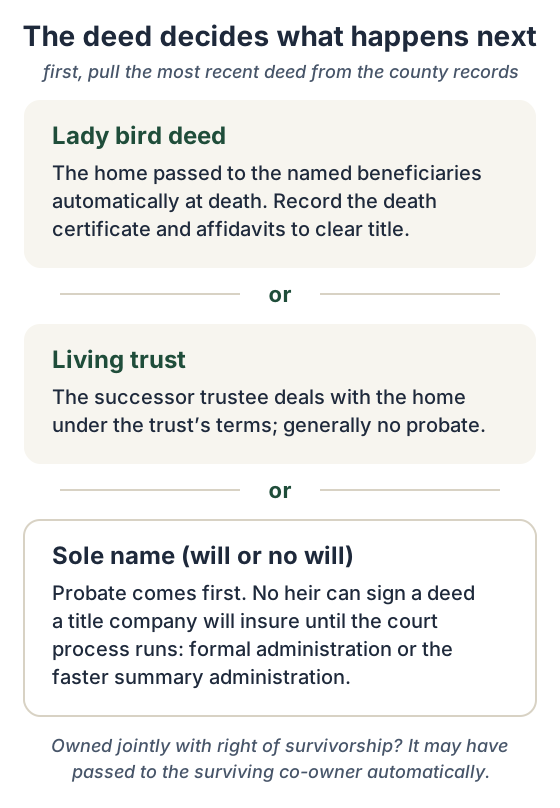
If there was a lady bird deed or the house was in a trust, you may not need probate at all. A lady bird deed (an enhanced life estate deed) passes the home to the named beneficiaries automatically at death. Clearing title is mostly paperwork: recording the death certificate and the right supporting affidavits. The same is generally true for a home owned by a revocable trust; the successor trustee can deal with it under the trust’s terms. Here is exactly what to do with a lady bird deed after a death →
If the house was in the decedent’s sole name, it has to go through probate before anyone can sell it. Probate is the court process that moves title from the person who died to the people who inherit. Until it runs, no heir can sign a deed a title company will insure. Depending on the size of the estate and how long ago the death occurred, that may be a full formal administration or the faster, cheaper summary administration. Either way, start it sooner rather than later; the house is in limbo until you do.
One more titling wrinkle: if the home was owned jointly with a right of survivorship (common between spouses), it may have passed to the surviving co-owner automatically. The deed will tell you.
2. The Mortgage Follows the House, Not You
Many heirs panic about the mortgage. Take a breath. The loan is secured by the house, not by you personally. Inheriting a mortgaged home does not make you personally liable for the debt, and federal law (the Garn-St Germain Act) generally blocks the lender from calling the whole loan due simply because the home passed to a relative at death.
What the lender can do is foreclose if the payments stop. So the practical rules are simple:
- Keep the payments current, even while probate is pending. If the estate has funds, the personal representative can pay from there; if not, the heirs who want to keep the house should cover it.
- Tell the servicer about the death. Send the death certificate and ask to be confirmed as a successor in interest, which entitles you to information about the loan.
- Decide later. Once title is clear, you can usually keep paying as is, formally assume the loan, refinance into your own name, or sell and pay it off at closing. You do not have to solve this in week one.
A caution: a reverse mortgage works differently and does come due after the borrower’s death, on a clock. If the home had one, get advice quickly.
Not sure if the house needs probate?
Send us the deed. In a free 30-minute consult we will tell you which path you are on and what it will cost, before you commit to anything.
Book your free consult3. Florida Homestead: Protection From Creditors, and Some Special Rules
If the house was the decedent’s primary Florida residence, it was probably their homestead, and that is good news for you. Under Florida law, a homestead that passes to the owner’s spouse or heirs generally passes protected from the decedent’s creditors. Credit card companies and most other creditors of the estate cannot force the sale of the family home to get paid. That protection is one of the strongest in the country, and it travels to you with the house.
There is a flip side: homestead has special inheritance rules when a spouse or minor child survives. Florida restricts how a homestead can be left in a will in those situations, and if the rules were broken the surviving spouse may end up with a life estate (the right to live there for life) while the children hold the remainder, or the spouse can elect a half interest instead. If you are a surviving spouse, or you inherited alongside one, read how Florida homestead works for a surviving spouse →
4. Inheriting With Siblings: What Happens When One Wants to Sell
This is where inherited houses turn into family fights. When several heirs inherit one house, they own it as tenants in common: each holds an undivided fraction of the whole, and nobody owns any particular room. No survivorship, no majority rule. Your brother cannot sell the house out from under you, but he also does not need your permission to sell his share, and any co-owner can file a partition case asking a court to divide or sell the property.
For inherited family homes, Florida’s heirs-property law softens what used to be a brutal process. When a court finds the home qualifies as heirs property, it must order a neutral appraisal of the whole property, and the co-owners who want to keep the home get a 45-day right to buy out the co-owner seeking a sale, at the appraised value times that person’s fraction, with no lowball discount. If no buyout happens, the court prefers physically dividing the property where that is practical, and if a sale truly is necessary, it is an open-market sale through a broker at no less than the appraised value, not a courthouse-steps auction.
Those protections matter, but a partition case is still a lawsuit against your own family. The better sequence is almost always: agreement first, court second. One sibling buys the others out at an agreed price, or everyone signs a co-ownership agreement covering expenses and an eventual sale, or the family lists the house together. We negotiate and paper those deals, and when a co-heir will not be reasonable, we litigate partition and inheritance disputes in court →
5. Taxes: Mostly Better News Than You Fear
Capital gains: the step-up usually saves you. When you inherit, your tax basis in the house resets to its value at the date of death. Sell soon after, and the taxable gain is usually small or zero, because you are only taxed on appreciation after the death, not the decades of growth before it. This is the single most misunderstood piece of inheriting real estate. Here is how the step-up in basis works →
Inheritance tax: Florida has none. No Florida inheritance tax, no Florida estate tax, nothing owed to the state for receiving the house. The details, including the handful of other states that do tax inheritances →
Property taxes: the one real trap. The decedent’s homestead exemption and their Save Our Homes cap (the limit on how fast the assessed value can rise) do not transfer automatically. If you make the home your own permanent residence, you must apply for your own exemption with the county property appraiser, generally by March 1 of the year after you take title. If nobody qualifies, the property is reassessed at full market value and the cap resets, and on a home the family has owned for decades the tax bill can jump dramatically. Some narrow exceptions exist (certain transfers to a spouse or other circumstances), so check before assuming the worst, but never assume the old tax bill is your tax bill.
6. Call the Insurance Company Before Anything Else Goes Wrong
A quiet, urgent item: the homeowner’s insurance policy was issued to the person who died, and most policies treat a vacant home very strictly. Coverage can shrink or lapse after the home sits empty for as little as 30 to 60 days. Call the carrier, report the death, and ask what the estate or the heirs need to keep the house covered (often a vacant-home endorsement or a new policy). A burst pipe in an uninsured, empty house can cost more than the entire probate. While you are at it: secure the property, forward the mail, and keep the utilities on enough to prevent mold and freeze damage.
Frequently Asked Questions
I Inherited a House in Florida. Can I Sell It Right Away?
It depends on how the house was titled. If your parent had a lady bird deed or a trust, the house passed to you outside of court, and once the death certificate and any required affidavits are recorded you can sell. If the house was in your parent’s sole name, it has to go through probate first, and no one can give a buyer clear title until the court process runs. Either way, do not sign a contract with a buyer or an investor until you know which path you are on. We can usually tell you in one conversation.
The House Has a Mortgage. Do I Have to Pay It Off Now?
No. The mortgage stays attached to the house, and federal law generally stops the lender from demanding immediate payoff when a home passes to family at death. What you must do is keep the monthly payments current, because the lender can still foreclose for missed payments. Contact the servicer, send the death certificate, and ask to be treated as a successor in interest. Later, you can usually keep paying, formally assume the loan, refinance it into your name, or sell the house and pay it off at closing.
Do I Owe Florida Inheritance Tax on the House?
No. Florida has no inheritance tax and no estate tax, so the state takes nothing when you inherit a home here. Federal estate tax only touches very large estates, far above what most families have. The tax most heirs actually face is capital gains when they sell, and the stepped-up basis rule usually shrinks that to little or nothing if you sell reasonably soon after the death. Property taxes are the one item that can genuinely go up, because the homestead exemption does not transfer automatically.
My Sibling Wants to Sell and I Want to Keep the House. Who Wins?
Neither of you can simply outvote the other. As co-heirs you own the house together as tenants in common, and any co-owner can file a partition case asking a court to divide or sell it. For inherited family homes, Florida’s heirs-property law adds real protections: the court orders a neutral appraisal, and the co-owners who want to keep the house get a 45-day window to buy out the one who wants to sell, at full appraised value for their share. Most families are far better off negotiating a buyout or a written agreement before anyone files. We help with both.
Does the Homestead Exemption on the Property Taxes Carry Over to Me?
No, and this surprises a lot of heirs. The decedent’s homestead exemption and Save Our Homes cap do not follow the property. If you move in and make the home your own permanent residence, you must apply for your own exemption with the county property appraiser, generally by March 1 of the year after you take title. If no one qualifies or the deadline passes, the property is reassessed at full market value and the tax bill can jump sharply on a long-held home. Put the March 1 date on your calendar now.
I Live Out of State. Can You Handle This Remotely?
Yes. A large share of the people who inherit Florida homes live somewhere else, and our practice is built for that. Probate filings, deed and title work, and negotiations with co-heirs can all be handled remotely, with documents signed where you live. You generally do not need to fly to Florida for a routine probate or to clear title after a lady bird deed. The 30-minute consult is free, by Zoom, and we will map out exactly what your situation needs.
Common Situations
The out-of-state daughter. A woman in New Jersey inherits her mother’s Naples condo, sole name, small mortgage. We open a summary administration remotely, she keeps the payments current, and four months later she sells with clear title. The step-up in basis means almost no capital gain on the sale.
The lady bird shortcut. Three siblings learn their father recorded a lady bird deed years ago. No probate needed: we record the death certificate and the supporting affidavits, and the title company clears the sale within weeks. The only surprise is the property-tax reassessment, which we flag before they price the house.
The brother who wants out. Two sisters want to keep the family home; their brother demands a sale. Before he files a partition case, we get a neutral appraisal and negotiate a buyout of his one-third at appraised value, with the sisters refinancing to fund it. The house stays in the family and nobody pays litigation costs.
The reverse mortgage clock. A son inherits his mother’s condo and assumes he can take his time, the way he could with a regular mortgage. But her loan was a reverse mortgage, and a reverse mortgage comes due after the borrower dies, on a deadline. He calls the servicer in week one, gets the payoff figure, and lists the condo; it sells in time, and the equity above the loan comes to him instead of being lost to foreclosure. With a reverse mortgage, the first call to the servicer is the step that protects everything else.
Sources of Law
- Fla. Stat. §732.401 (descent of homestead; spouse’s life estate or election of a half tenancy in common) and §732.4015 (restrictions on devise of homestead with a surviving spouse or minor child). flsenate.gov (retrieved 2026-06-10)
- Fla. Stat. §§64.201 to 64.211 (Uniform Partition of Heirs Property Act: appraisal at §64.206, the 45-day cotenant buyout at §64.207, partition-in-kind preference at §64.208, open-market sale at §64.210). flsenate.gov (retrieved 2026-06-10)
- Art. X, §4, Fla. Const. (homestead exemption from forced sale; inurement to the surviving spouse or heirs). flsenate.gov (retrieved 2026-06-10)
- 12 U.S.C. §1701j-3(d) (Garn-St Germain Depository Institutions Act; due-on-sale clause generally unenforceable on a transfer to a relative resulting from the borrower’s death).
- Fla. Stat. §196.031 (homestead property-tax exemption) and §193.155 (Save Our Homes assessment cap and reassessment on change of ownership). flsenate.gov (retrieved 2026-06-10)
Updated on July 12, 2026. Reviewed by Kevin D. Klagge, Esq., Fla. Bar No. 99502. Attorney Kevin Klagge represents families, businesses, and international clients in estate planning and international law, with a focus on Florida legal tools. He litigates estate and business issues in court. General information about Florida law, not legal advice, and no attorney-client relationship is created. Deadlines and outcomes depend on your facts; past results do not guarantee a similar outcome. Do not send confidential information until we have agreed to represent you.