
The Short Version
When a married Florida homeowner dies, the home does not simply pass to the spouse the way most people expect. If there are also children or grandchildren, the surviving spouse gets a life estate, the right to live there for life, while the home’s ownership (the "remainder") goes to the descendants. Or the spouse can choose a one-half ownership share outright instead. And here is the part that catches families: a will cannot take the home away from the spouse. A will can validly leave the homestead outright to the spouse (when there is no minor child); anything else, and Florida law decides, not the will.
The Spouse’s Two Choices
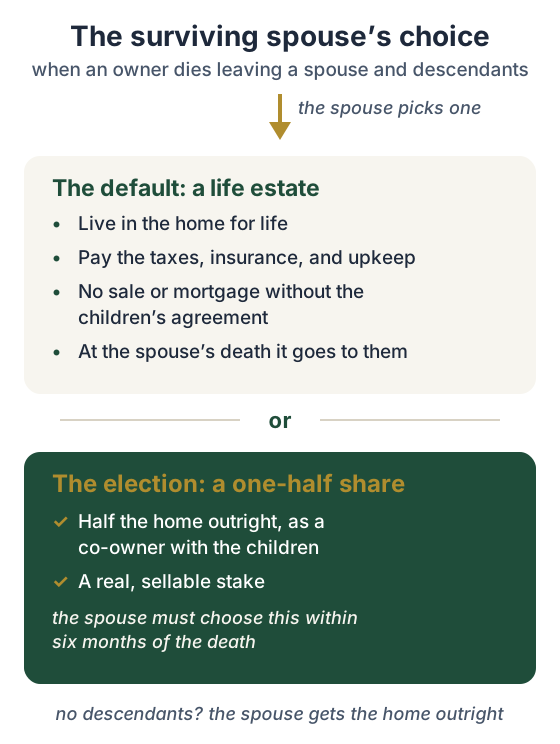
When the owner is survived by a spouse and descendants, the spouse picks between:
- A life estate. Live in the home for life, but pay the taxes, insurance, and upkeep, and you cannot sell or mortgage it without the children’s agreement. At your death it goes to them.
- A one-half ownership share. Take half the home outright as a co-owner with the children, a real, sellable stake. The spouse must choose this within six months of the death.
The half-share option often wins when the spouse cannot carry the costs alone, wants to be able to sell, or does not get along with the remaindermen. Because of the deadline, it is a decision to make promptly. If there is a spouse but no descendants, the spouse simply gets the home outright.
Lost a spouse, or planning so your spouse is protected?
Book a free 30-minute consult. We will explain your options, the election deadline, and how to plan around all of it.
Book your free consultThe Good News: It Skips Probate and Creditors
There is an upside. The Florida homestead generally passes outside probate and is shielded from the deceased owner’s creditors, even if the estate has more debts than assets. The home flows to the spouse and family rather than being sold to pay bills. The transfer is usually confirmed by a focused court order recognizing the property as protected homestead, which we handle, far simpler than a full probate.
How to Avoid the Whole Tangle
Plan ahead and none of this has to happen. Married couples often hold the home as tenants by the entirety, so it passes automatically to the survivor with full ownership, no life estate, no election. A lady bird deed can pass the home cleanly when used within the rules, and a valid spousal waiver lets couples, especially in blended families, agree on a different outcome in advance. The fix is almost always easier than the cleanup.
Frequently Asked Questions
What Does a Surviving Spouse Get From a Florida Homestead?
It depends on who else survives. If the owner leaves a spouse and descendants (children, grandchildren), the spouse automatically receives a life estate in the home, the right to live there for life, with the remainder passing to the descendants. Or, within a set window, the spouse can choose instead to take a one-half ownership share outright, with the descendants taking the other half. If the owner leaves a spouse and no descendants, the spouse gets the home outright. These defaults apply whenever the home was not validly left to the spouse: a will can leave the homestead outright to the spouse (if there is no minor child), but it cannot leave the home away from the spouse.
What Is the "Life Estate or Half Interest" Choice?
When an owner dies survived by a spouse and descendants, Florida gives the spouse two options. Option one (the default) is a life estate: the spouse can live in the home for the rest of their life, but is responsible for the taxes, insurance, and upkeep, and cannot sell it without the descendants’ agreement. Option two is to elect a one-half undivided ownership share as a tenant in common with the descendants, which the spouse can do within six months of the death. The half-interest option often makes sense if the spouse cannot afford the upkeep or wants the ability to sell.
Can a Will Override a Surviving Spouse’s Homestead Rights?
No. This surprises people constantly. If you are survived by a spouse or a minor child, you cannot freely leave your Florida homestead in your will, and a will that tries to is simply ignored as to the home. The spouse’s rights, the life estate or the half-interest election, control regardless. The ways around the default: leave the home outright to your spouse in the will or trust (valid when there is no minor child), get a valid spousal waiver signed in advance, or hold title in a way (like tenancy by the entirety) that passes the home automatically.
Does the Home Go Through Probate?
Generally the homestead passes outside the probate estate and is protected from the deceased owner’s creditors, even if the estate is insolvent. That is a powerful benefit: the home flows to the spouse and family rather than being sold to pay debts. But the transfer still has to be confirmed, often through a court order determining that the property was protected homestead, which is a focused proceeding, not a full probate. We handle that determination for families.
Why Would a Spouse Choose the Half Interest Over the Life Estate?
A life estate sounds generous, but it comes with burdens: the spouse pays the taxes, insurance, and maintenance, cannot sell or mortgage without the remaindermen, and the home eventually goes to them. Electing a one-half ownership share instead gives the spouse a real, sellable stake, which can be the better choice if the spouse wants to downsize, cannot carry the costs alone, or does not get along with the remaindermen. The election has a deadline, so it is a decision to make promptly with advice.
How Do I Avoid This Whole Situation?
Planning ahead. Married couples often hold the home as tenants by the entirety, so it passes automatically to the survivor with full ownership, no life estate, no election, no court determination. A lady bird deed can also pass the home cleanly when used within the spouse and minor-child rules. And a valid spousal waiver lets couples, especially in blended families, agree in advance on a different outcome. We sort out the right approach at the consult.
Common Situations
The second marriage. A husband leaves everything to his second wife, but he has adult children from his first marriage. Because they are his descendants, his wife takes a life estate (or elects half), and the children get the remainder, regardless of the will. Knowing this in advance, the couple could have signed a waiver or held title differently.
The spouse who couldn’t afford to stay. A widow inherits a life estate but cannot cover the taxes and upkeep on her own. Within the six-month window, she elects the one-half ownership share so she can sell and downsize.
The estranged spouse. A husband and wife separated years ago but never filed for divorce. His will leaves the home to the brother who cared for him at the end. Under Florida law, only a divorce ends spousal rights, so his wife is still his surviving spouse: the gift of the home fails, and she takes a life estate or elects the half interest. The fix was available in advance; a divorce, or a signed waiver of spousal rights, would have let the home pass as he intended.
Sources of Law
- Fla. Const. Art. X §4(c) (homestead devise/descent). Fla. Stat. §732.401 (surviving spouse takes a life estate with remainder to descendants per stirpes, or elects an undivided one-half tenancy-in-common interest under §732.401(2)); §732.4015 (devise restriction). Foundational case: Lorraine v. Grover, Ciment, 467 So. 2d 315 (Fla. 3d DCA 1985). flsenate.gov (retrieved 2026-06-08)
Updated on July 12, 2026. Reviewed by Kevin D. Klagge, Esq., Fla. Bar No. 99502. Attorney Kevin Klagge represents families, businesses, and international clients in estate planning and international law, with a focus on Florida legal tools. He litigates estate and business issues in court. General information about Florida law, not legal advice, and no attorney-client relationship is created. Outcomes and deadlines depend on your facts. Do not send confidential information until we have agreed to represent you.