
The Short Answer
A will is your instruction sheet for probate: it says who gets what, but your estate still passes through the public, months-long probate court. A living trust holds your assets and passes them without probate, privately and faster, and it lets someone manage your affairs if you become incapacitated. The trust costs more upfront and only works if you fund it. For a simple estate, a will (plus a lady bird deed) is often enough; for a complex one, the trust earns its cost.
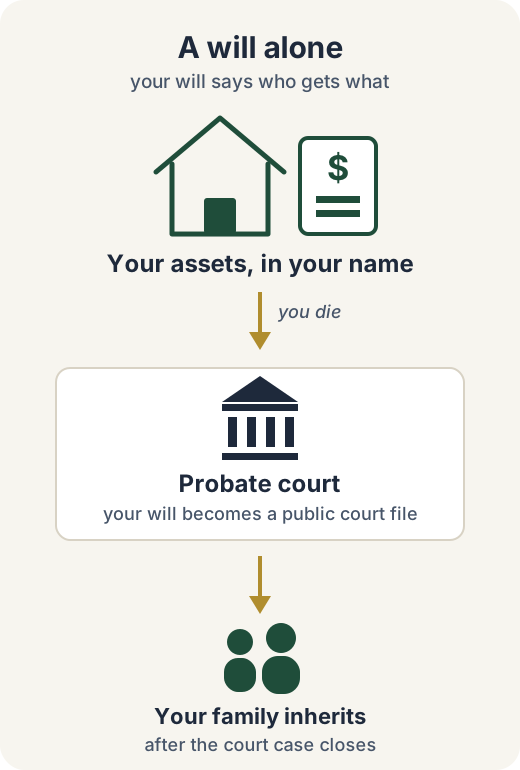
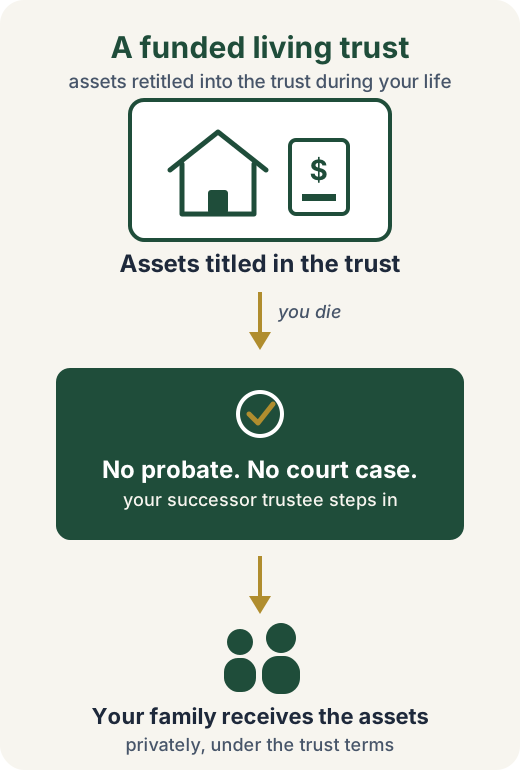
Here is the choice in one picture. A will is carried out in probate court; a funded trust is carried out privately by your successor trustee.
Side by Side
| Feature | Will | Living trust |
|---|---|---|
| Avoids probate | No | Yes (if funded) |
| Private | No (public record) | Yes |
| Helps if you’re incapacitated | No | Yes |
| Names a guardian for kids | Yes | No (the will does) |
| Upfront cost | Lower | Higher |
Who Needs a Trust Instead of Just a Will
Lean toward a living trust if you own property in more than one state, have a blended family or minor children, want privacy, or want someone to step in if you lose capacity. A will (often with a lady bird deed on the home and beneficiary designations) is usually enough for a single-state estate passing to adult children who get along. The deed selector narrows it in four questions.
Not sure which one you need?
Book a free 30-minute consult. We will weigh it against your actual goals, and often the cheaper option is the right one.
Book your free consultIt’s Not Really One or the Other
Even with a trust, you want a short pour-over will as a backstop and to name a guardian for minor children. So a trust plan includes a will. The real decision is whether to build your plan around a will alone or around a funded trust, and that turns on your situation, not on the documents in the abstract.
Frequently Asked Questions
What Is the Difference Between a Will and a Living Trust in Florida?
A will is your instruction sheet for probate: it says who gets what, but your estate still goes through the probate court, which is public, takes months, and costs money. A living trust holds your assets and passes them to your beneficiaries without probate, privately and faster, and it also lets a successor trustee manage things if you become incapacitated. The trade-off is that a trust costs more upfront and only works if you fund it by retitling your assets into it. A will is simpler and cheaper; a trust does more.
Do I Need a Will or a Living Trust?
It depends on your situation. A will (often paired with a lady bird deed on your home) is enough for many people with a simple Florida estate and beneficiaries who get along. A living trust earns its higher cost if you own property in more than one state, have a blended family or minor children, want privacy, or want someone to manage your affairs smoothly if you lose capacity. Many people are well served by the simpler, cheaper route, and we will tell you honestly which one you actually need.
Do I Still Need a Will if I Have a Living Trust?
Yes. Even with a trust you want a short "pour-over" will as a backstop, to catch any asset you never moved into the trust and to name a guardian if you have minor children. So it is not really will versus trust in the end; a trust plan includes a will. The real question is whether your plan should be built around a will alone or around a funded trust.
Is a Living Trust Worth It in Florida?
For the right person, yes. Florida has no state estate tax and a strong homestead, and for a simple estate a will plus a lady bird deed can avoid most of probate cheaply, so not everyone needs a trust. But for larger or multi-state estates, blended families, privacy, or incapacity planning, a funded trust is worth the cost because it avoids probate entirely and works while you are alive, not just after death. We help you weigh it against your actual goals.
Which Is Cheaper, a Will or a Trust?
A will is cheaper to set up: a stand-alone will is a few hundred dollars, and a will-based plan with powers of attorney runs from about $1,200. A revocable trust plan costs more, $3,200 for an individual or $4,500 for a couple at our firm, because it does more and includes funding your home. But a will sends your estate through probate, which has its own cost; sometimes the trust saves money overall by avoiding that. We will run the comparison for your situation.
Can a Lady Bird Deed Replace a Trust?
For the narrow goal of keeping a single Florida home out of probate, often yes. A lady bird deed does that for a few hundred dollars while you keep full control. It does not coordinate a whole estate, handle out-of-state property, or manage incapacity the way a trust does, but for a simple estate the deed plus beneficiary designations can accomplish much of what people want from a trust, at a fraction of the cost.
Common Situations
The simple estate. A widow with one paid-off Florida home and two adult children adds a will and a lady bird deed. Her home avoids probate and her wishes are clear, for a few hundred dollars, no trust needed.
The case for the trust. A couple with homes in Florida and up north, children from prior marriages, and a wish for privacy sets up a funded revocable trust that coordinates everything and avoids probate in both states.
The single retiree. A retired Orlando teacher, never married and with no children, was less worried about who inherits than about who steps in if she cannot manage her own affairs one day. A will only speaks after death; it would sit in a drawer through any illness. Her funded living trust names her niece as successor trustee, so the niece can take over the accounts and pay the bills without asking a court for a guardianship, and the plan stays private. For her, the trust earned its cost while she is alive, not after.
Sources of Law
- Wills: Fla. Stat. ch. 732 (a will is admitted to probate, ch. 733). Revocable trusts: Fla. Stat. ch. 736; probate avoidance requires funding (retitling assets into the trust). Florida has no state estate or inheritance tax. (retrieved 2026-06-08)
Updated on July 12, 2026. Reviewed by Kevin D. Klagge, Esq., Fla. Bar No. 99502. Attorney Kevin Klagge represents families, businesses, and international clients in estate planning and international law, with a focus on Florida legal tools. He litigates estate and business issues in court. General information about Florida law, not legal advice, and no attorney-client relationship is created. Which plan fits depends on your situation. Do not send confidential information until we have agreed to represent you.