
What a Will Is, and the Thing It Cannot Do
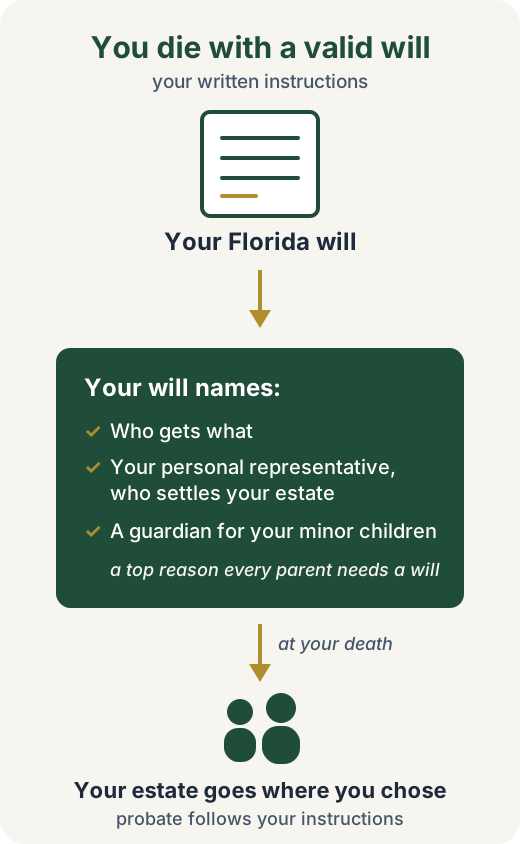
A will is your written instructions for who gets what and who is in charge when you die. Here’s the part people miss: a will does not avoid probate. It is the instruction sheet probate follows, so assets titled only in your name still pass through the probate court before anyone inherits.
If avoiding probate, delay, and a public filing is your goal, you need additional tools: a revocable living trust, a lady bird deed on the homestead, or beneficiary, pay-on-death, and transfer-on-death designations. See what probate costs and takes →
Florida Execution Requirements
Get these three exactly right, or the will can be thrown out. The will must be (a) in writing, with the person making the will signing at the end; (b) witnessed by at least two people present when you sign or acknowledge it; and (c) those witnesses must sign in the presence of you and of each other. Missing any one of these is the single most common reason a do-it-yourself will fails.
The Self-Proving Affidavit
Two witnesses are required; the notary is what makes the will self-proving. With the statutory affidavit attached and signed at the ceremony, the will is admitted to probate without tracking down your witnesses to testify years later. We include it on every will.
What a Will Does for You: Personal Representative and Guardian
Your will names your personal representative (the person in charge of settling your estate, sometimes called an executor in other states) and, for parents, nominates a guardian for minor children. That guardian nomination is a top reason every parent needs a will even alongside a trust. A minor cannot inherit outright, so a will sets up a trust to manage a child’s share until they are old enough.
Your Homestead Cannot Be Freely Left in a Will
The recurring Florida trap: if you are survived by a spouse or a minor child, you generally cannot leave your homestead to whoever you choose. It may pass to the spouse only if there is no minor child; otherwise it passes by statute and the will’s gift of the home is ignored. We coordinate your will with a lady bird deed and, where needed, a written spousal waiver to make sure the whole plan lines up.
You Cannot Fully Disinherit a Spouse With a Will Alone
A surviving spouse may elect 30% of the elective estate regardless of what your will says, plus rights to the homestead, certain exempt property, and a family allowance. A spouse you married after the will, or a child born after it, can also take a share. These rights can be waived only by a valid written marital agreement. A will has limits; we plan around them.
Here is the whole picture in one place:
| What your will does | What a will cannot do |
|---|---|
| Says who gets what when you die | Avoid probate: assets in your name alone still go through court |
| Names your personal representative, the person who settles your estate | Freely leave the homestead if you have a spouse or a minor child |
| Nominates a guardian for your minor children | Fully disinherit a spouse, who can still elect 30% of the elective estate |
| Sets up a trust to manage a minor child’s share | Enforce a no-contest clause, which is unenforceable in Florida |
A will is worth nothing if it’s signed wrong.
We run the signing ceremony correctly and make it self-proving, for a flat fee.
Book your free consultRevoking and Updating Your Will
You revoke a will with a later will or codicil (a formal amendment), or by destroying it with intent. Divorce automatically voids gifts to your former spouse. You cannot just handwrite changes on the will, as that can revoke it unintentionally. Any change requires the same two-witness formalities: a codicil or a new will. How to change your will with a codicil →
One Florida quirk: a no-contest clause (a provision that cuts out anyone who challenges the will) is unenforceable here. Review your will after a marriage, divorce, new child, a significant asset change, or a move to Florida.
What Happens With No Will: Intestacy
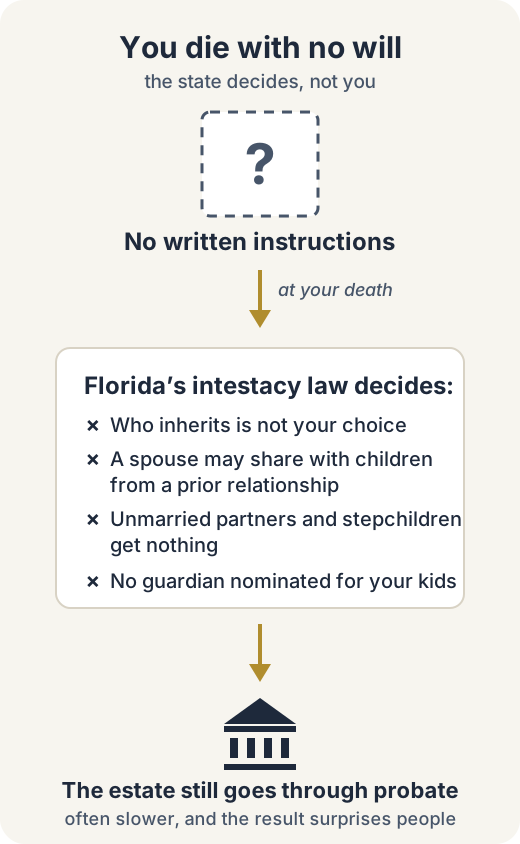
With no will, Florida’s intestacy law, not you, decides who inherits, and the result surprises people: a current spouse may share with children from a prior relationship, while unmarried partners and stepchildren get nothing. The estate still goes through probate, often slower and with extra court supervision. See exactly who inherits without a will → · probate without a will →
Why DIY and Online-Form Wills Fail in Florida
A cheap template doesn’t walk you through the signing ceremony, the self-proving affidavit, the homestead restriction, the elective-share trap, or guardian nominations. The cheapest will is the one that never gets challenged. See how to write a valid Florida will → · are handwritten wills legal here? →
Florida does allow electronic wills with remote notarization, but the law restricts remote notarization for vulnerable adults, so elderly clients should sign in person. We handle the ceremony correctly either way.
Flat Fee
A simple will is $299. Most clients choose the will-based plan from $1,200 individual / $1,950 couple, which adds a durable power of attorney, a health-care surrogate, a living will, and HIPAA. Special-needs, minors’, or spendthrift provisions add $750.
A will rarely stands alone. Pair it with a durable POA and directives, and you have a complete incapacity plan. See what a will costs → · full pricing →
Get the Florida Estate Plan Checklist (free PDF)
The one-page checklist for Florida households: every document you need, the Florida homestead and spousal rules that surprise people, and the two steps most plans forget.
We'll email the PDF and nothing else unless you ask. Downloading it does not create an attorney-client relationship; please don't send confidential details yet.
Frequently Asked Questions
Does a Will Avoid Probate in Florida?
No. A will is the instruction sheet probate follows. Assets in your name alone still go through the probate court. To avoid probate you need a trust, a lady bird deed on your home, or beneficiary designations.
What Makes a Will Legal in Florida?
It must be in writing, signed by you at the end, and witnessed by at least two people who watch you sign and then sign in front of you and each other (§732.502). A notarized self-proving affidavit (§732.503) is strongly recommended so the will is accepted without finding the witnesses later.
Do I Need a Notary for a Florida Will?
Two witnesses are required; a notary is not required for validity, but it makes the will self-proving, which avoids delays at probate. We always include it.
How Much Does a Will Cost in Florida?
A stand-alone will is a $299 flat fee at our firm. Most clients choose the will-based plan from $1,200, which adds a durable power of attorney and health-care directives.
Can I Write My Own Will or Use an Online Form in Florida?
You can, but Florida’s signing rules, homestead restriction, and spousal-share rules trip up most DIY wills, and a defective will is unenforceable. Online forms also miss guardian nominations and self-proving affidavits.
What Happens if I Die Without a Will in Florida?
Florida’s intestacy law decides who inherits, which can split your estate between a spouse and children from a prior relationship, and leaves unmarried partners and stepchildren with nothing. The estate still goes through probate.
Can I Leave My Florida House to Anyone I Want in My Will?
Not if you have a spouse or a minor child. Florida’s homestead rules limit how you can devise your home, and a devise that breaks them is ignored. A lady bird deed is often the cleaner fix.
Can I Disinherit My Spouse in My Will?
Not with a will alone. A surviving spouse can elect 30% of the elective estate, plus homestead and other statutory rights, unless they signed a valid pre- or postnuptial waiver.
Can I Disinherit a Child in Florida?
An adult child, yes, Florida lets you leave an adult child out of your will for any reason, but you must say so clearly and explicitly; simply omitting their name can backfire (a child born after the will, for example, may be a "pretermitted" heir entitled to a share). A minor child is different: Florida’s homestead rules protect a minor child’s interest in the family home, so you cannot freely disinherit a minor child from the homestead. We make sure a disinheritance is done deliberately and holds up.
How Do I Change or Revoke My Florida Will?
With a codicil or a new will signed with the same formalities, or by destroying the old one with intent to revoke. Do not handwrite changes on the will, that can revoke it by accident. Divorce automatically cancels gifts to your former spouse.
Does My Will Need Updating When I Move to Florida?
A will valid where it was signed is generally valid in Florida, but a Florida review is smart: homestead, the elective share, and self-proving rules differ from other states, and snowbirds often need to refresh.
What Is a Self-Proving Affidavit and Do I Need One?
It is a short sworn statement, signed by you and your two witnesses in front of a notary and attached to the will. It is not required for the will to be valid, but you want it. Without one, after you die the court may have to track down your witnesses for sworn testimony that they watched you sign, which is hard years later if they have moved or passed away. A self-proving affidavit lets the will be admitted to probate on its own, faster and cheaper. We include one with every will we prepare.
Common Situations
The will that was signed wrong. A Miami widower downloaded a template and signed it with one witness, his neighbor. A Florida will needs two witnesses who also sign in front of each other, so the court would not admit it, and his estate passed by intestacy to relatives he hadn’t spoken to in years. A correctly executed, self-proving will would have cost a few hundred dollars.
The parents who only needed a will. A young Broward couple with two small kids and a modest home didn’t need a trust yet. What they needed was a will to name a guardian and a personal representative, plus durable POAs and directives. The will-based plan covered all of it at a flat fee, with the guardian nomination front and center.
The heirloom list. A Sarasota widow wanted specific pieces of jewelry to go to specific granddaughters, and she kept changing her mind. Instead of redoing her will each time, her will points to a separate signed list for tangible items (Florida law calls it a separate writing), which she can rewrite whenever she likes, no witnesses needed. The most recent list controls, and it cannot cover money, real estate, or business property, so the will still does the heavy lifting. One page, updated freely, ended the worry.
Sources of Law
- Fla. Stat. ch. 732: §732.502 (execution), §732.503 (self-proving affidavit), §732.501/§732.504 (who may make/witness), §§732.505 to 732.508 (revocation; §732.507 divorce), §732.517 (no-contest clauses void), §§732.4015/732.401 (homestead devise), §§732.201 ff. (elective share), §732.702 (waiver), §§732.521 to 732.525 (electronic wills). Homestead: Art. X §4, Fla. Const. flsenate.gov (retrieved 2026-06-07)
Updated July 12, 2026. Reviewed by Kevin D. Klagge, Esq., Fla. Bar No. 99502. Attorney Kevin Klagge represents families, businesses, and international clients in estate planning and international law, with a focus on Florida legal tools. He litigates estate and business issues in court. General information about Florida law, not legal advice, and no attorney-client relationship is created.