
Yes, Often, if You Act Early
Dementia does not flip a switch from capable to incapable. Capacity is time-specific, and many people in the early stages can validly sign a power of attorney, losing that ability only as the disease advances. The diagnosis is the signal to act now, while your parent can still understand and choose. Wait, and you may lose the option entirely.
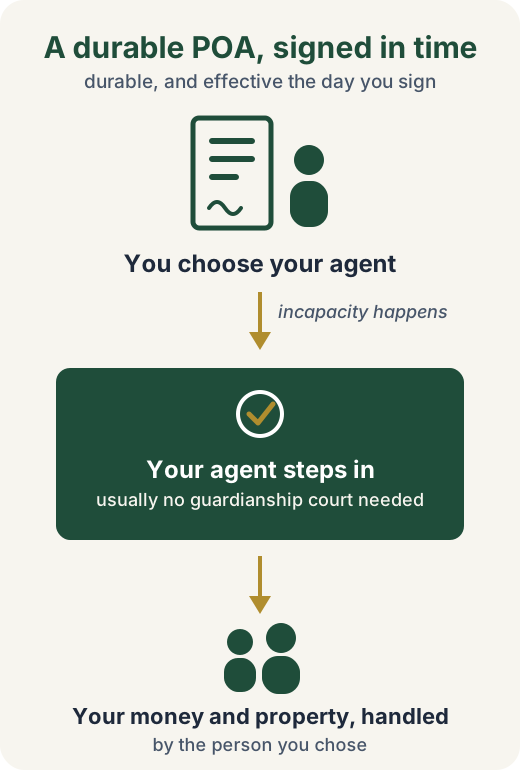
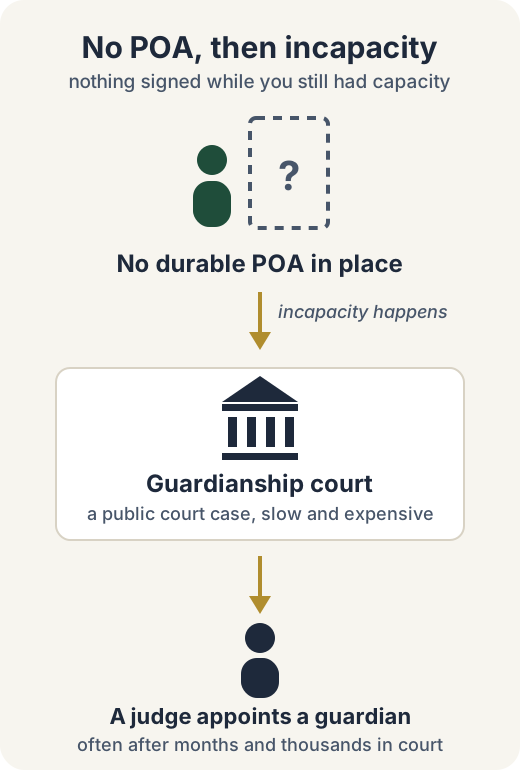
The Capacity Florida Requires (Higher Than a Will)
This is the part most people get wrong. To sign a power of attorney, your parent needs contractual capacity: the ability to understand the nature, significance, and consequences of the document. Florida treats this as a higher bar than the capacity to sign a will. A will can sometimes be signed during a brief lucid moment; a power of attorney generally requires more than a fleeting moment of clarity. So a parent who could sign a simple will might still not have enough capacity for a POA. It is a careful judgment, made at the moment of signing.
Is a Doctor’s Capacity Letter Required?
No, Florida does not require it, but with a dementia diagnosis we strongly recommend one. Lack of capacity, usually paired with a claim of undue influence, is the most litigated issue in these cases, and the document is most likely to be challenged by the very family members who were not involved. Your strongest protection is a written capacity assessment from your parent’s treating physician or a neuropsychologist, dated the day of signing, together with the attorney’s own documented assessment. The attorney makes the legal determination of capacity; the physician’s evaluation informs and backs it up. We arrange and coordinate both.
The window may be open now. It won’t stay open.
A free 30-minute consult assesses whether your parent can still sign and sets it up the defensible way.
Book your free consultYou Can’t Wait for It to "Kick In"
Since 2011, Florida no longer allows "springing" powers of attorney that activate later when a person becomes incapacitated. A POA here is effective the moment it is signed. You cannot sign one now that quietly waits for dementia to advance; your parent must have capacity at signing, and the document works immediately. That is one more reason early action is everything.
If the Window Has Already Closed
If your parent can no longer understand the document, a power of attorney is off the table, and the path is guardianship. Florida treats it as a last resort: a court will not appoint a guardian if a less-restrictive option would work. Where it is necessary, the process involves a petition, a three-member examining committee (including a physician or psychiatrist), a court-appointed attorney for your parent, and a judge who must find incapacity by clear and convincing evidence. We can guide your family through it, and it is the strongest argument for getting everyone else you love to plan ahead.
Frequently Asked Questions
Can a Parent With Dementia Sign a Power of Attorney?
Yes, if they still have the mental capacity to understand it at the time they sign. A dementia diagnosis by itself does not take that away. Capacity is time-specific: many people in the early stages of Alzheimer’s or another dementia can validly sign, and lose that ability only as the disease advances. The honest answer is that there is usually a window, and it closes, which is why families should act at the diagnosis, not after.
How Much Capacity Does a Florida POA Require?
More than people assume. To sign a power of attorney, your parent needs what Florida courts call contractual capacity: the ability to understand the nature, significance, and consequences of what they are signing. Notably, this is treated as a higher bar than the capacity to sign a will. A will can sometimes be signed in a brief lucid moment; a power of attorney generally requires more than a fleeting moment of clarity. So a parent who could manage a simple will might still not have enough capacity for a POA, which is a judgment that has to be made carefully at signing.
Does Florida Require a Doctor to Certify Capacity Before Signing?
No. Florida law does not require a physician’s capacity determination before a power of attorney is signed. But with a dementia diagnosis it is strongly recommended, because lack of capacity (often paired with a claim of undue influence) is the single most litigated issue in these cases. The best protection is a written capacity assessment from your parent’s treating physician or a neuropsychologist dated the day of signing, plus the attorney’s own documented assessment in the file. The attorney makes the legal determination of capacity; the doctor’s evaluation informs and supports it.
Can We Make a POA That Only Starts if Mom Gets Worse?
Not in Florida. Since October 1, 2011, Florida no longer allows "springing" powers of attorney that activate later on incapacity. A power of attorney is effective the moment it is properly signed. That makes acting early even more important: you cannot sign one now that quietly waits to take effect; your parent must have capacity at signing, and the document works right away.
Is an Old Power of Attorney Still Valid After a Dementia Diagnosis?
Yes, if it was validly signed while your parent had capacity and it says it is durable. A durable power of attorney is built for exactly this: it keeps working after the diagnosis and through incapacity, and your parent does not need to sign anything new. Two cautions, though. Banks sometimes hesitate over a document signed many years ago, so if your parent still has capacity, re-signing a current version smooths acceptance. And if the old document is missing powers the family will need, such as gifting authority for Medicaid planning, the remaining window is the only chance to add them.
What if My Parent Has Already Lost Capacity?
Then a power of attorney is no longer an option, and the path is guardianship under Florida law. It is meant to be a last resort: a court cannot appoint a guardian if a less-restrictive alternative would work, but if no valid POA exists and your parent can no longer sign one, guardianship may be necessary. The process involves a petition, a three-member examining committee that includes a physician or psychiatrist, a court-appointed attorney for your parent, and a judge who must find incapacity by clear and convincing evidence. We can guide you through it.
Sources of Law
- Florida Power of Attorney Act, Fla. Stat. ch. 709 (effective on execution, no springing powers for POAs signed on or after Oct. 1, 2011; execution §709.2105). The capacity to execute a power of attorney is contractual capacity, which Florida courts hold requires understanding the nature, significance, and consequences of the act, more than a transient lucid interval. Guardianship: ch. 744 (examining committee §744.331; clear-and-convincing standard; least-restrictive-alternative preference). (retrieved 2026-06-10)
Updated on July 12, 2026. Reviewed by Kevin D. Klagge, Esq., Fla. Bar No. 99502. Attorney Kevin Klagge represents families, businesses, and international clients in estate planning and international law, with a focus on Florida legal tools. He litigates estate and business issues in court. General information about Florida law, not legal or medical advice, and no attorney-client relationship is created. Whether a specific person has capacity is a fact-specific determination. Do not send confidential information until we have agreed to represent you.