
The Steps
- Confirm your parent has capacity. They must understand what they are signing. If they do, you can proceed; if dementia or a stroke has taken that, it is too late, and the route is guardianship.
- Choose the documents. Usually a durable financial power of attorney plus a health-care surrogate (and a living will and HIPAA). The financial one and the medical one are separate.
- Have it drafted for Florida. The document must say it is durable, include the specific powers your family needs (like Medicaid and gifting authority), and avoid the gaps that get a generic form rejected.
- Sign it correctly. Your parent signs before two witnesses and a notary. Florida is strict about this; get it wrong and the POA may be invalid.
- Use it. Banks and agencies often want a certified copy or their own paperwork. We help you put it to work so it is accepted the first time.
We’ll handle the drafting and the details.
A free 30-minute consult gets the right POA in place, by phone or video, even out of state.
Book your free consultIf Your Parent Is Reluctant
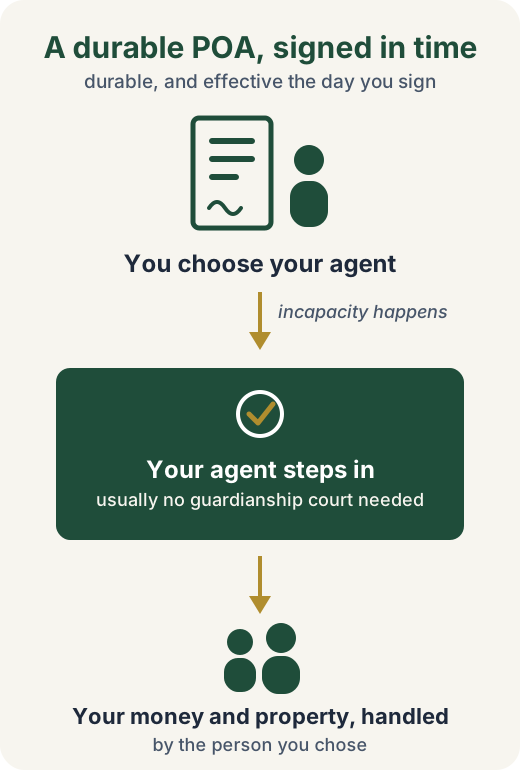
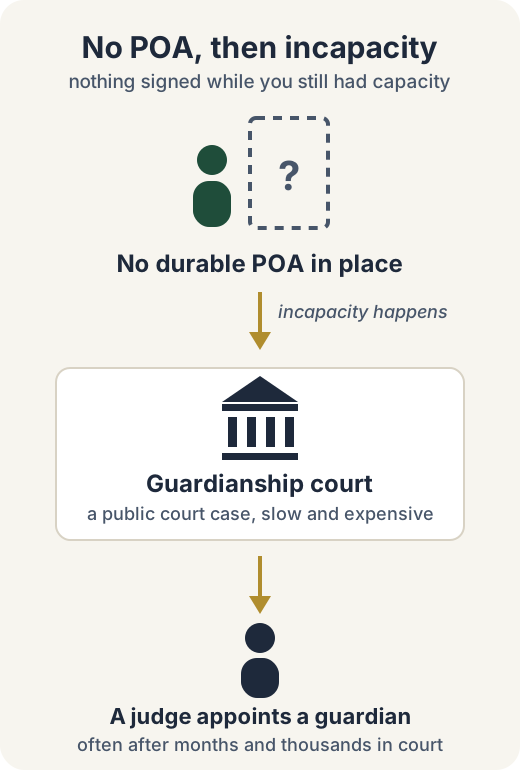
Frame it around control, not loss: a power of attorney keeps decisions in the family and out of a courtroom, your parent chooses who acts and can limit it. If they will agree to the financial POA and the health-care surrogate first, you have the urgent pieces; the rest can follow. What you cannot do is force it. And if they later lose capacity without one, the only path left is guardianship, which is the best reason to start the conversation now. This fits into the broader checklist for aging parents.
Frequently Asked Questions
How Do I Get Power of Attorney for My Mother or Father?
Your parent signs it, you cannot give it to yourself. The steps: confirm your parent still has the mental capacity to sign; decide which documents you need (usually a durable financial power of attorney plus a health-care surrogate); have them properly drafted for Florida; sign in front of two witnesses and a notary; and then use it (banks and agencies often ask for a certified copy or their own forms). An attorney handles the drafting and makes sure it will actually be accepted when you need it.
What if My Parent Won’t Agree to It?
Lead with control, not loss. Many parents resist because it feels like giving up independence; it helps to explain that a power of attorney keeps decisions in the family and out of a courtroom, and that they choose who acts and can limit it. If they will agree to even the financial POA and the health-care surrogate first, you have the urgent pieces. What you cannot do is force it: if your parent has capacity and refuses, the document is not an option, and if they later lose capacity, the path becomes guardianship.
Can I Get Power of Attorney if My Parent Has Dementia?
Only if they still understand what they are signing. Early-stage dementia does not automatically remove that capacity, many people in the early stages can validly sign, but as it advances the window closes. That is why families should act at the first diagnosis, not wait. If your parent can no longer understand the document, it is too late for a power of attorney, and guardianship is the remaining route.
Can My Parent Sign a Power of Attorney From the Hospital?
Usually yes, if they still understand what they are signing. A hospital stay does not take away capacity by itself; the test is whether your parent can grasp the document, not where they are. We arrange a mobile notary and witnesses at the bedside, and Florida’s signing ceremony (two witnesses plus a notary) works the same way there. One caution: if the POA includes the separately initialed powers for gifts or trusts, the witnesses must be physically in the room, so this is not a signing to do over video. Move quickly, because sedation or a sudden decline can close the window.
Can You Help if I Live Out of State?
Yes. We regularly set up powers of attorney for Florida parents whose adult children live elsewhere. Everything is done by phone and video, with remote or mobile-notary signing arranged for your parent, so you do not have to travel to get it done.
Sources of Law
- Florida Power of Attorney Act, Fla. Stat. ch. 709 (execution §709.2105, durability §709.2104, superpowers §709.2202). Health-care surrogate: ch. 765. (retrieved 2026-06-10)
Updated on July 12, 2026. Reviewed by Kevin D. Klagge, Esq., Fla. Bar No. 99502. Attorney Kevin Klagge represents families, businesses, and international clients in estate planning and international law, with a focus on Florida legal tools. He litigates estate and business issues in court. General information about Florida law, not legal advice, and no attorney-client relationship is created. Do not send confidential information until we have agreed to represent you.