
The Short Answer
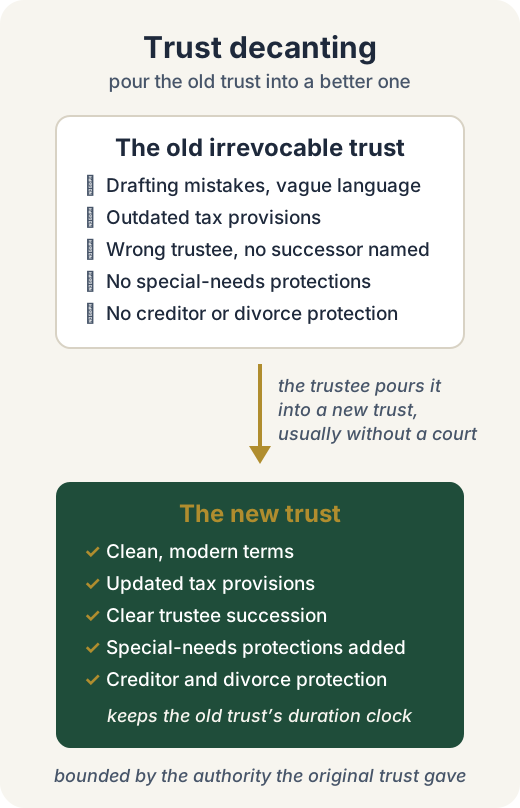
Decanting is how you fix an irrevocable trust that no longer works. The trustee "pours" the assets from the old trust into a new one with better terms, leaving the problems behind, much like pouring wine off its sediment. It is usually done by the trustee without a court, and it is the reason a trust labeled "irrevocable" is rarely as frozen as people assume. Florida has one of the more mature and reliable decanting laws in the country.
What Decanting Can Fix
Trusts are written for the law and the family of their time, and both change. Decanting can address:
- Drafting mistakes or vague, contradictory language.
- Outdated tax provisions that no longer match current law.
- The wrong trustee, or missing trustee-succession provisions.
- A beneficiary who is now disabled and needs special-needs protections to keep their benefits.
- Adding creditor and divorce protection a beneficiary’s share never had.
What decanting cannot do is hand a beneficiary something the original trust never permitted. The trustee’s power to decant is bounded by the authority the original trust gave, which is one of the safeguards built into the law.
Why Florida, and Moving a Trust Here
Florida’s decanting statute is well-developed and refined over the years, with clear rules trustees can rely on. Some states have thin or untested decanting law, which makes trustees nervous; Florida’s is one of the more dependable. That is why families with an old trust in another state will move the trust’s legal home to Florida (its "situs"), put a Florida trustee in place, and decant it into a cleaner trust under Florida law to fix dated terms and modernize its machinery. (Decanting cannot extend the trust’s lifespan: under Florida law the new trust keeps the original trust’s duration limit.) We do this in coordination with the family’s original or home-state attorney.
Stuck with a trust that no longer fits?
Book a free 30-minute consult. We will tell you whether decanting can fix it, usually without court, and what it would take.
Book your free consultDecanting vs. Going to Court
A big advantage of decanting is that an authorized trustee can usually do it without a judge, by following the statute and notifying the beneficiaries, which makes it faster, more private, and cheaper than a court fight. When a change is contested, or goes beyond the trustee’s authority, a court modification may still be the path. Because Kevin handles trust disputes in court as well as trust planning, we can tell you honestly which route your situation needs, and steer you to the lighter one when it will work. See trust litigation →
Frequently Asked Questions
What Is Trust Decanting?
Decanting is the legal way to fix or update an irrevocable trust by "pouring" its assets from the old trust into a new one with better terms, the way you would pour wine from one bottle to another and leave the sediment behind. The trustee, not a court, generally does it. It is how an "unchangeable" trust can actually be modernized when the original terms no longer make sense.
I Thought an Irrevocable Trust Could Never Be Changed?
That is the common belief, and it is mostly a myth in Florida. While you cannot casually revoke an irrevocable trust, Florida law gives a trustee real tools to adapt it, and decanting is the most powerful. If a trust was poorly drafted, has outdated tax provisions, names the wrong trustee, needs to last longer, or should protect a beneficiary who is now disabled, decanting can often fix it without going to court.
What Can Decanting Fix?
A lot: correcting drafting mistakes or ambiguous language, updating old tax planning to current law, changing or adding trustee-succession provisions, adding protective (spendthrift) or special-needs provisions for a beneficiary, consolidating or splitting trusts, and changing the trust’s governing state. What it cannot do is give a beneficiary something the original trust never allowed; the trustee’s power to decant is bounded by the authority the original trust granted.
Why Is Florida a Good State to Decant Into?
Florida’s decanting statute is mature and well-developed, with clear rules about what a trustee can and cannot do, and it has been refined over the years (including 2025 updates). That clarity gives families and trustees confidence. Some states have thin or untested decanting law; Florida’s is one of the more reliable, which is why families move an old out-of-state trust to Florida and decant it into a cleaner one.
Can I Move an Out-of-State Trust to Florida and Improve It?
Often, yes. Many trusts allow the situs (the trust’s legal home) to be moved, and once a trust is governed by Florida law with a Florida trustee, it can be decanted under Florida’s favorable statute to clean up dated terms, modernize tax provisions, or fix trustee-succession problems. (One honest limit: decanting cannot stretch the trust’s lifespan; the new trust keeps the old trust’s duration clock.) We frequently do this in coordination with the family’s original or home-state attorney.
Does Decanting Require Going to Court?
Usually not. One of decanting’s advantages over a court modification is that an authorized trustee can generally do it without a judge, following the statute’s requirements and notifying the beneficiaries. That makes it faster, more private, and less expensive than litigation. When the situation is contested or the desired change exceeds the trustee’s authority, a court modification may still be the route, and we will tell you which path fits.
How Much Does Decanting Cost?
It is quoted at the consult, because it depends on the trust, what needs fixing, and whether any party is likely to object. Decanting is typically far less expensive than living with a broken trust or fighting about it in court. If your irrevocable trust is not doing what the family needs, a short consult will tell you whether decanting is the fix.
Common Situations
The broken old trust. A trust drafted decades ago has dated tax language and names a trustee who has since died, with no clear successor. Rather than litigate, the trustee decants the assets into a clean new trust that fixes both, without a court.
The beneficiary who became disabled. A grandchild who is a trust beneficiary develops a disability and now receives means-tested benefits. Decanting adds special-needs provisions so an inheritance does not cost the grandchild those benefits.
The out-of-state trust brought home. A family moves an old trust’s situs to Florida and decants it into a longer-lasting, cleaner trust under Florida’s favorable law, coordinated with their prior attorney.
The pot trust the siblings outgrew. Two adult siblings share a single trust, one pot for both families, and disagree about nearly every investment and distribution. Rather than litigate, the trustee decants the assets into two separate trusts, one for each branch, on the same terms each side already had. The friction ends without a courtroom, and each branch deals only with its own share from then on.
Sources of Law
- Fla. Stat. §736.04117: Florida’s trust decanting statute (a trustee’s power to invade principal and appoint to a second trust), refined by 2025 amendments (ch. 2025-159). flsenate.gov (retrieved 2026-06-07)
- Florida Trust Code, Fla. Stat. ch. 736 (trust modification and reformation generally); §689.225 (trust duration up to 1,000 years).
Updated on July 12, 2026. Reviewed by Kevin D. Klagge, Esq., Fla. Bar No. 99502. Attorney Kevin Klagge represents families, businesses, and international clients in estate planning and international law, with a focus on Florida legal tools. He litigates estate and business issues in court. General information about Florida law, not legal advice, and no attorney-client relationship is created. Whether a trust can be decanted depends on its terms and your facts. Do not send confidential information until we have agreed to represent you.