
The Short Answer
A life estate splits ownership of property across time. A life tenant keeps the right to live in and use the property for the rest of their life, and a remainderman automatically owns it when the life tenant dies, outside probate. It is a popular way to pass a home to the next generation. In Florida it comes in two forms, and choosing the right one matters enormously: a traditional life estate, or an enhanced one, which you probably know as the lady bird deed.
Traditional vs. Enhanced: the Difference That Matters
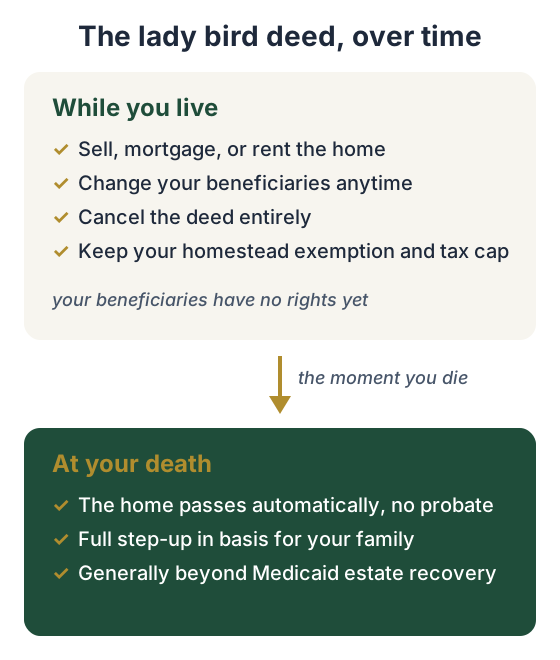
This is the whole ballgame. In a traditional life estate, the day you sign, your remainderman owns a future interest, so you can no longer sell, refinance, or change your mind without their permission, and the law treats it as a completed gift, with tax and Medicaid consequences. In an enhanced life estate (the lady bird deed), you keep all of those powers: you can sell, mortgage, or revoke during your life without anyone’s consent, and there is no completed gift.
Swipe the table sideways to compare both versions.
| Feature | Traditional life estate | Enhanced (lady bird) |
|---|---|---|
| Sell or refinance without consent | No | Yes |
| Change your mind / revoke | No | Yes |
| Completed gift when signed | Yes (a problem) | No |
| Avoids probate | Yes | Yes |
For Florida estate planning, the enhanced version is almost always the right one. More on the enhanced life estate deed →
Life Tenant and Remainderman: Who Can Do What
The life tenant can live in and use the property for life, pays the taxes, insurance, and upkeep, and cannot let it fall into ruin (called "waste") in a way that harms the remainderman. The remainderman holds the future right to the property. The key difference: in a traditional life estate the remainderman’s interest is locked in immediately, so they must agree to any sale; in an enhanced one, they have no say until the life tenant dies.
How a Life Estate Is Valued
A life estate has a dollar value split between the two interests, and it comes up in two places: gift and estate tax, and Medicaid. The value is not 50/50; it depends on the life tenant’s age. The IRS and Medicaid each use actuarial tables (the IRS uses the §7520 tables; Florida Medicaid uses its own life-estate and remainder table) that assign a percentage to the life tenant’s interest and the rest to the remainderman, based on life expectancy. An older life tenant’s interest is worth less, a younger one’s more. This valuation matters because a traditional life estate is a present gift of the remainder, so its value can count against you for the Medicaid look-back and for gift tax, another reason the enhanced (lady bird) version, which makes no completed gift, is usually cleaner. We run the numbers for your situation at the consult.
Why a Traditional Life Estate Can Backfire
The plain life estate you may read about in older guides carries real risks: you lose control of your own home, the transfer can start a five-year Medicaid penalty, a sale during your lifetime costs the remainderman’s share of the tax step-up in basis, and your remainderman’s creditors or divorce can reach their interest in your home. These are precisely the traps the lady bird deed was built to fix, which is why traditional life estates are rarely the right call in Florida today.
Thinking about a life estate for your home?
Book a free 30-minute consult. We will tell you whether a life estate, a lady bird deed, or a trust fits, before you sign anything.
Book your free consultHow to Set One Up
For almost everyone, the right life estate is a lady bird (enhanced life estate) deed, which we prepare for a flat $399 individual / $449 joint plus recording. We confirm it fits, check your homestead and marital status, name your remainder beneficiaries with backups, and record it. If a trust suits you better, we will say so. Try the deed selector →
Frequently Asked Questions
What Is a Life Estate?
A life estate is a way of splitting ownership of property across time. One person, the "life tenant," has the right to live in and use the property for the rest of their life. Another person, the "remainderman," automatically owns it when the life tenant dies. It is a common estate-planning tool because the property passes to the remainderman at death without probate. In Florida there are two versions, a traditional life estate and an enhanced one (the lady bird deed), and the difference between them is large.
What Is the Difference Between a Traditional and an Enhanced Life Estate?
In a traditional (ordinary) life estate, the moment you sign, the remainderman owns a future interest, so you can no longer sell, mortgage, or change your mind without their consent, and the transfer counts as a completed gift with tax and Medicaid consequences. An enhanced life estate, better known as a lady bird deed, reserves all of those powers to you: you can still sell, mortgage, or revoke during your life without anyone’s permission, and there is no completed gift. For Florida estate planning, the enhanced version is almost always the right one.
What Are the Rights of a Life Tenant and a Remainderman?
The life tenant can live in and use the property for life, and is generally responsible for taxes, insurance, and upkeep, and cannot commit "waste" (let it fall apart or harm the remainderman’s future interest). The remainderman holds a future right to the property. In a traditional life estate the remainderman’s interest is present and vested, so they must consent to a sale; in an enhanced (lady bird) life estate, the remainderman has no say until the life tenant dies, because the life tenant kept the power to deal with the property.
Does a Life Estate Avoid Probate?
Yes. Whether traditional or enhanced, the property passes to the remainderman automatically at the life tenant’s death, outside probate. That also keeps it beyond Florida Medicaid estate recovery, which only reaches the probate estate. This probate-avoidance is the main reason people use a life estate, and the enhanced (lady bird) version achieves it while letting you keep full control during your life.
What Are the Downsides of a Traditional Life Estate?
A traditional life estate creates real problems that the enhanced version avoids: you lose control (you cannot sell or refinance without the remainderman), the transfer is a completed gift that can trigger a five-year Medicaid penalty, a sale during your lifetime costs the remainderman’s share of the proceeds its tax step-up, and if the remainderman has creditors or a divorce, their interest in your home can be exposed. These are exactly the traps a lady bird (enhanced life estate) deed was designed to fix, which is why traditional life estates are rarely the better choice in Florida.
Is a Life Estate the Same as a Lady Bird Deed?
A lady bird deed is a specific, improved type of life estate, the "enhanced" one. So all lady bird deeds are life estates, but not all life estates are lady bird deeds. When Floridians talk about using a life estate for estate planning, they almost always mean the lady bird deed, because it keeps the owner in control. The plain "life estate" you may read about in older materials is usually the traditional version, with the downsides above.
How Do I Set Up a Life Estate in Florida?
With a properly drafted deed. For almost everyone, that means a lady bird (enhanced life estate) deed, which our firm prepares for a flat $399 (individual) or $449 (joint) plus recording. We confirm it is the right tool, check your homestead and marital status, name your remainder beneficiaries with backups, and record it. The free 30-minute consult is where we make sure a life estate fits your goal at all, or whether a trust suits you better.
Common Situations
The "I read about a life estate" client. A widow read that a life estate avoids probate and wants one. We explain the traditional version would cost her control of her own home; an enhanced life estate (lady bird deed) gets the same probate-avoidance while she keeps the right to sell or change her mind.
The old traditional life estate. A man set up a plain life estate years ago and now cannot refinance because his son, the remainderman, must consent and they have fallen out. We look at correcting it. The enhanced version would never have created the deadlock.
The simple win. A homeowner with one Florida home and adult children gets a lady bird deed: a life estate that keeps her in full control and passes the home automatically, for a few hundred dollars.
The life estate she never signed. A widow learns after her husband’s death that she holds a life estate in the family home, created by Florida’s homestead law rather than by any deed, because he left no valid plan and had adult children from a prior marriage. Those children own the remainder, so she cannot sell or refinance without them, yet she carries the taxes, insurance, and upkeep for as long as she lives there. Florida law does give her one alternative: she can elect to take a half interest in the home outright instead. Planning ahead, with a deed or a trust the couple chooses together, keeps a family from being handed this structure by default.
Sources of Law
- Life estates and remainders are recognized at Florida common law; the enhanced life estate (lady bird) deed is recognized by Florida common law and title-underwriting practice. (retrieved 2026-06-08)
- IRC §1014 (step-up in basis at death) vs §1012 (carryover basis on a lifetime gift). Fla. Stat. §409.9101 (Medicaid estate recovery, probate estate only); 42 U.S.C. §1396p (5-year transfer look-back).
Updated on July 12, 2026. Reviewed by Kevin D. Klagge, Esq., Fla. Bar No. 99502. Attorney Kevin Klagge represents families, businesses, and international clients in estate planning and international law, with a focus on Florida legal tools. He litigates estate and business issues in court. General information about Florida law, not legal advice, and no attorney-client relationship is created. Which tool fits depends on your specific facts. Do not send confidential information until we have agreed to represent you.